"ninjatrader margin" - Google News
[unable to retrieve full-text content] NinjaTrader Review 2026 Investing.com
cryptocurrency news |
| Facebook’s Cryptocurrency Won’t Let You Buy Your Privacy Back - CCN Posted: 30 Mar 2019 01:30 PM PDT Facebook is moving into cryptocurrency, aiming to create some type of stablecoin that will make it possible for users within its gargantuan network to transfer value to each other. Why Facebook doesn't simply use an existing cryptocurrency is, of course, a mystery. Facebook's Not Going Full Crypto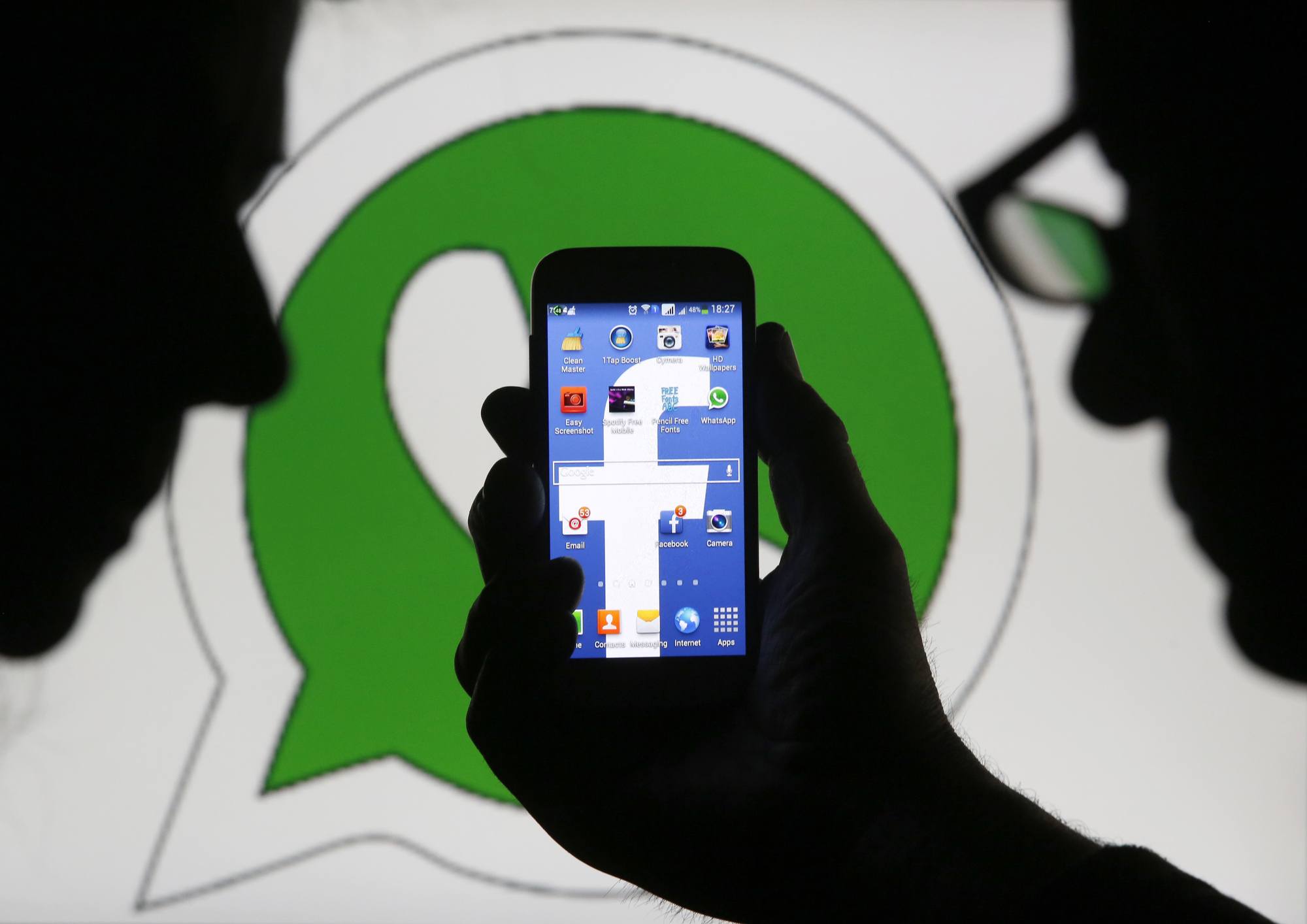 Facebook should have just added general support for cryptocurrency rather than building its own proprietary token. | Source: REUTERS / Dado Ruvic Perhaps it fears to open the minds of users too much: from cryptocurrency they might graduate to better social media platforms, like Minds.com. What will the real value of another token pegged to the US dollar be to the crypto community? We can assume that over such a broad swath of users, the thing is bound to see some real utility. We can expect the same for Telegram, who've decided to build a blockchain from scratch – something to compete in the ever-deepening sea of smart contract platforms like Tron and Cardano. But if the coin is just issued by Facebook, at its discretion, without any real decentralized governance, does it even qualify as a cryptocurrency? That much is debatable. We've talked before about the properties of a cryptocurrency, and why JP Morgan's internal stablecoin just doesn't fit the bill. There is some delineation, too, between algorithmic stablecoins like MakerDAO's Dai, which is a collateralized asset and pegged currencies like Paxos Standard. The Dai essentially relies on the market to determine the validity of its tokens – coins are backed by at least 150% their value in Ethereum, which provides a pretty good cushion to ensure liquidity. LOL ZuckerbucksAs Minds.com CEO Bill Ottman has said, it's fabulous that Jack Dorsey and Mark Zuckerberg, proprietors of the tools of mass distraction for a whole generation, are interested in sound money. It's good that they're investing resources into blockchain technologies. But if they don't walk the walk, why should we listen to them talk?
The name Jack Dorsey has gone parabolic in crypto circles recently due to his participation in the Lightning Network torch event and friendship with Elizabeth Stark. Dorsey still supports censoring unpopular speech, though, which Bitcoin and cypherpunks as a whole despise. Typically, we understand that censorship is the least effective tool for any debate. In too many cases, it provides undue interest and influence to the censored. Most of those trolls banned from Twitter are, in fact, disgusting people. But now they're all shacked up at Gab, with fewer and fewer people to call them on their sh*t. But Twitter gets it wrong from time to time. See the whole #learntocode debacle: Facebook's crypto plans are still pretty unclear. One thing is for certain: the blockchain can be used for anything at all. It can be used to increase personal freedom – or take it away. Blockchains store value, track supply chains, and enable tamper-resistant voting. The technology can probably also be used to successfully launch an uncontrollable version of SkyNet. Facebook Coin: The Antithesis of a Privacy CoinHere's a thought, though. If you think Chainalysis' analytical tools are scary, imagine what a cryptocurrency built by Facebook might reveal. If it knows, for example, that you held the token, and then someone else held it, and then someone in Iran managed to hold it, would that trace back to you? How much user data will be present in these tokens? Will they have a prayer of being fungible or tradeable on regular crypto exchanges? Whatever they do, the blockchain natives will continue to do better. That's my opinion until I see evidence otherwise. Facebook should just create an open money API and let the various players in the blockchain space compete for dominance on it. They'd probably make more money that way and have less need for blockchain engineers.  |
| SEC Crypto Mom: ‘Dismissive’ U.S. Regulators Miss the Point of Cryptocurrency - CCN Posted: 30 Mar 2019 05:58 AM PDT If ever there was a canary in the regulatory coal mine, it's Crypto Mom. U.S. SEC Commissioner Hester Peirce, who is affectionately known as Crypto Mom by the community, admitted that regulators, who have so far denied a bitcoin ETF, have missed the mark on crypto. In a sit-down interview with crypto and blockchain journalist Laura Shin, Peirce appears to suggest that crypto's potential has been stifled by a narrow-minded SEC that refuses to embrace change. She places the fate of a bitcoin ETF in the hands of the market, however, though Crypto Mom is quick to point out where regulation has failed.
Indeed, Peirce serves as a bridge of sorts between blockchain innovators and regulators, one whose voice validates the frustration felt by much of the industry. She said in response to an audience question about U.S. regulators and the New York Department of Financial Services:
That doesn't mean crypto is off the hook. Crypto Mom points to the U.S. capital markets, whose very strength is thanks in part to regulation. The winning point went to crypto when she added that "regulators must still look at new spaces."  An accurate description of Blockchain innovators vs. U.S. SEC / Source: Giphy.com Semi-Punt on bitcoin ETF timingNo doubt, the question on everyone's mind in the audience was on the future of a bitcoin ETF. Peirce semi-punted here, refusing to predict whether the SEC would approve a bitcoin ETF in 2019. Crypto Mom famously dissented from her peers on the Winklevoss ETF decision, which was ultimately rejected. She remains the only grown up in the room on the topic.
Having said that, bitcoin ETF applicants can appeal a rejection at the SEC staff level or a commissioner can overrule the early denial. A previous interview between Crypto Mom and the Chamber of Digital Commerce ICOsOn ICOs, the SEC sounds a lot like the IRS, with Peirce saying: "It's better that you reach out to them than we [come to you]." It works in favor of a project when there's no centralized point of marketing to investors. Without what Cryp0to Mom describes as a monopoly on information, a project "looks a lot less centralized, it looks a lot less like a securities offering." When in doubt, shout it out.
This is especially good advice in light of "dated" regulator guidance such as the Howey Test that blockchain founders must use. Meanwhile, SEC officials are still hammering away at clear regulatory guidance on ICOs, an issue that has had them stumped for a while. *Peirce's direct quotes are courtesy of social media updates of the event.  |
| Posted: 30 Mar 2019 02:08 PM PDT  The core reason for the rise of the decentralized currency world was the need for financial freedom. The ability to control one's money was at the center of the emergence of cryptocurrency. This principle was voiced, coupled with a bold prediction, by the Chief Executive Officer of Binance, CZ. Changpeng Zhao, or CZ as he is popularly known in the crypto-world, stated that due to the nature of fiat currency creation at the will of the government, cryptocurrency will, one day, surge one thousand times against sovereign currency. His tweet failed to specify if this difference would be in value or the number of users. He tweeted:
CZ's tweet was in reply to a tweet by Anthony Pompliano, quoting Alan Greenspan, the former chair of the Federal Reserve of the United States. Many financial analysts had earlier claimed that Greenspan and his lax regulations against the big banks were fundamental in the Financial Market Collapse of 2008. Alan Greenspan had once stated this about US' debts at NBC's Meet the Press in August 2011:
Although the 'printing power' may allow a country to 'pay any debt', the eventual decrease in purchasing power of the currency in question will decline. As more of a currency is printed, the currency becomes less scarce, leading to its value to plummet. This action, taken at the whim of a government, in this case, to repay a debt, will lead to several externalities. Most notably, the currency of the people will fall and hence, inflationary pressure will rise, leading to a possible economic slump. CZ, and others in the cryptocurrency world see this defining principle as the fundamental reason why decentralized currency will take over the world, according to his tweet. Bitcoin [BTC] has the "halving" protocol in place to avoid situations like these, especially because there is no centralized intermediary. According to this protocol, the reward distributed to miners for block production decreases by half its value, with the production of every 210,000 blocks. During its early days, in 2009, the mining rewards were approximately 50 BTC per block. The first halving in 2012 saw the rewards decline to 25 BTC per block. Currently, the rewards stand at 12.5 BTC per block, following the 2016 halving. The third halving is scheduled for May 2020 and will see the rewards reduce to 6.25 BTC per block. The halving protocol ensures that the supply cap of 21 million Bitcoins is maintained and that inflationary pressure is kept in check, not by a supervisory authority, but by the principles of supply and demand.  |
| Warning: This John McAfee-Pumped Cryptocurrency Has Major Red Flags - CCN Posted: 30 Mar 2019 04:31 PM PDT By CCN.com: Another day, another John McAfee tweet pumping a cryptocurrency project that has alarming red flags. The latest dubious crypto token is called Apollo, an "all-in-one" cryptocurrency with supposedly-private transactions. Crypto Developers Call Out McAfee-Linked ApolloHowever, according to crypto development firm Jelurida, Apollo's so-called privacy features promoted are not so private after all.
Apollo's selling point is quite straight forward: they're the best cryptocurrency out there – for some unexplained reason. As stated on their website, cryptocurrency is inaccessible to the majority of the world as it requires a bank account, computer, knowledge, and patience. Their solution to this barrier is to initiate a decentralized network of physical locations allowing anyone to walk in and purchase Apollo, simply with cash. This will allegedly open up cryptocurrency to the vast majority of people without a bank account. Essentially, the Apollo team wants to create small exchange-like stores where people convert fiat to Apollo, and from there to other cryptocurrencies. Why you would need a coin for that, instead of using Bitcoin or any other major coin, is beyond my understanding. Maybe to fund the project? I really don't know. More troublingly, as Apollo states on the one-pager, the coin should have IP masking and public-private transaction options. However, that's not the case. Jelurida: Apollo Deceives Users about Cryptocurrency's Features This "private" cryptocurrency isn't actually private. | Source: Shutterstock In a blog post, the Jelurida team explained that several of the privacy features promoted by Apollo did not actually help users obfuscate their transaction details.
To prove their point, Jelurida built the "snake-oil" project – a modified version of the Nxt Blockchain Creation Kit Software adapted to connect to the Apollo blockchain and display all transactions from it, ignoring any misleading "private" flags. The Jelurida team's findings weren't surprising. It was possible to track all information regarding transactions, like addresses and amounts – which clearly shows there are no privacy features within the Apollo coin.
Watch Out for John McAfee PumpsI would be very wary of purchasing a position in a cryptocurrency being promoted by John McAfee, a person that has been known to promote any project for the right price. Regardless, if the coin does not possess the necessary technology to endow users with privacy, as claimed, that is a huge red flag. Traders and investors, beware.  |
| Japan’s Largest E-Commerce Site Announces Cryptocurrency Exchange Launch Date - BeInCrypto Posted: 30 Mar 2019 01:41 AM PDT Rakuten, the Japan-based e-commerce corporation, has announced an official launch date for its newest addition — a cryptocurrency exchange. Originally named Everybody's Bitcoin, the newly rebranded Rakuten Wallet will open for business this June. The company, known globally for technology and hardware sales, is hoping that the launch will coincide with increasing cryptocurrency payments on its websites. According to the company, the acquisition of Everybody's Bitcoin was intended to move it into the market space:
The company had already made strides into the cryptocurrency space with the creation of the Rakuten Coin last year. Designed as a blockchain addition to the company's Super Points loyalty program, the coin allows customers to redeem points anywhere in the Rakuten system.
The announcement highlights the already-growing movement toward blockchain and cryptocurrency in the larger enterprise market. For example, the recent announcement by JPMorgan of its in-house cryptocurrency, JPM Coin, and large numbers of blockchain patents by Bank of America reflect a growing adoption cycle. Rakuten appears to be following suit, ostensibly to provide greater connections with users — as well as to offer increased convenience. According to the company:
Whether the system will garner any users remains to be seen. Most cryptocurrency users are less likely to adopt an entirely new coin, rather than simply use a wallet that provides functionality. However, as blockchain technology and cryptocurrencies continue to gain public traction, enterprise interest will continue to grow in the nascent industry — and, as interest grows, adoption and increased values are likely to follow. Do you think Rakuten's offering will gain users, or is it just another sales pitch based on blockchain technology? Let us know in the comments below! Images courtesy of Shutterstock.  |
| You are subscribed to email updates from "cryptocurrency news" - Google News. To stop receiving these emails, you may unsubscribe now. | Email delivery powered by Google |
| Google, 1600 Amphitheatre Parkway, Mountain View, CA 94043, United States | |


Comments
Post a Comment