"ninjatrader margin" - Google News
[unable to retrieve full-text content] NinjaTrader Review 2026 Investing.com
Wait for October: New Bitcoin Miner Demand Is Again Outstripping Supply - CoinDesk |
| Wait for October: New Bitcoin Miner Demand Is Again Outstripping Supply - CoinDesk Posted: 25 Jun 2019 08:00 AM PDT Bitcoin's ongoing bull run has juiced demand for new mining equipment, putting pressure on manufacturers to produce enough machines to satiate buyers. The world's largest cryptocurrency by market cap is currently trading at above $11,000 after it surpassed the $10,000 level over the weekend – a nearly 200 percent jump since February. "The surge in bitcoin resulted in increased demand and supplies were already short," said Steven Mosher, head of global sales and marketing at Canaan Creative, maker of the Avalon miner. While he declined to disclose the firm's order volume, Mosher said in an email that "the current state of the industry is that inventories are down and demand is high." He told CoinDesk:
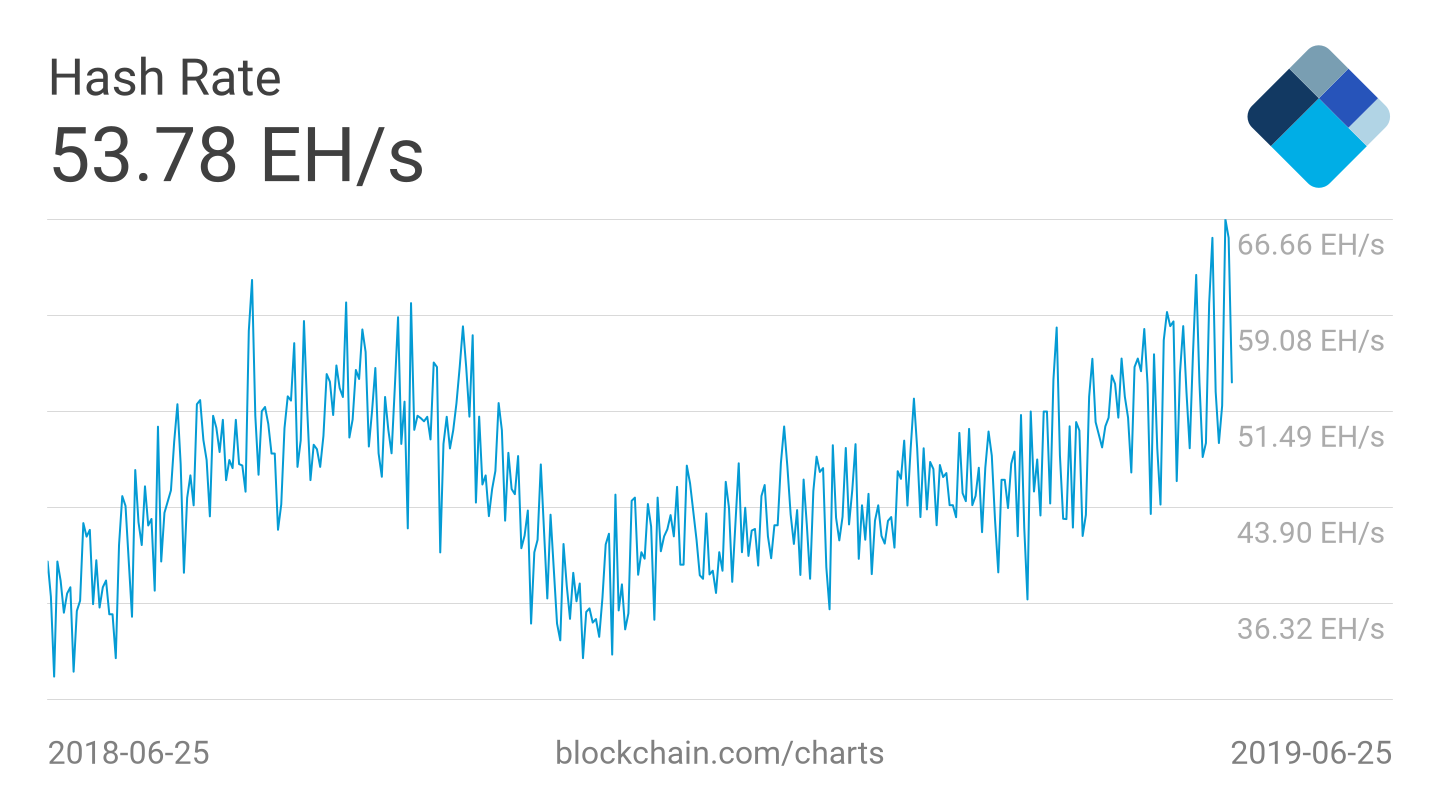
Back then, bitcoin's price had doubled from July to September in 2017 and further jumped by four times in the last quarter, reaching almost $20,000. The price increase over the past several months also led to a significant drop of the time it takes for new mining equipment to pay for itself, according to data provided by TokenInsight, a crypto startup that focuses on mining and trading research. The firm estimates the average payback period for most mining equipment in the second quarter has dropped to 60 to 150 days, a notable decrease from the previous range of 120 to 280 days. New modelsTo capture the new opportunities, Canaan launched a new mining model last month, the AvalonMiner 1041, which it claims can compute as much as 37 terahashes per second (TH/s) with electricity consumption at 2,361 watts per hour. By comparison, an older model, the Avalon 851, performs its calculations at a speed of around 14.5Th/s, consuming 1450 watts an hour. Mosher added that pre-orders for such models are already queued up to as late as October delivery, due to the bulk of buying interest coming from larger customers. Similarly, crypto mining giant Bitmain rolled out for sale improved versions of its AntMiner S9 model, dubbed AntMiner S9 SE and S9k just last week. Shipment of the first batch won't be scheduled until August, according to the firm's website. Even more expensive and powerful products, such as the WhatsMiner M20, launched by ex-Bitmain chip design director Zuoxing Yang, are seeing an increasing level of buying interest. Yang told CoinDesk that the next batch of M20s, which are scheduled for shipment as late as October, is "almost sold out" at the moment. But Yang added another important reason why the industry's supply is having difficulty catching up with the demand is production capacity due to the limited supply of chips from various vendors to begin with. "Bitcoin's hash rate increase just can't keep up with the pace of the price jump," Yang said. "Production capacity is the bottleneck." Hash rate boostIndeed, the resurgence of mining interest is also reflected in the overall amount of computing power devoted to securing the bitcoin network, which recently hit an all-time high.
Based on data from mining pool BTC.com, the latest one day and seven-day average hash rates are at 65 million TH/s and 58 million TH/s, respectively. This aggregated computing power has jumped by about 80 percent since late last year when the 14-day average bitcoin mining hash rate dropped to as low as 36 million TH/s amid bitcoin's price decline. Assuming all such additional computing power has come from more widely used mining models like the AntMiner S9 or Avalon 851 with an average hashing power of about 14 TH/s, that would translate to roughly 2 million mining units having been switched on over the past few months. As a result, BTC.com estimates that bitcoin mining difficulty – a measure of how hard it is to solve the math problems that earn new coins – will further increase by six percent at the beginning of the next adjustment cycle to an all-time-high level above 7.8 trillion. Bitcoin ASIC miner image via Shutterstock  |
| North America’s Largest Solar Bitcoin Mining Farm Coming to California - Cointelegraph Posted: 25 Jun 2019 04:33 AM PDT  California-based mining company Plouton Mining will build North America's largest solar-powered bitcoin mining farm, the company confirmed in a press release on June 25. Plouton, which is a subsidiary of Plouton Group Holding, says the site in Western Mojave will feature around 49 acres of solar panels generating 10-13 megawatts of electricity daily. The location was chosen due to its high annual quota of sunlight, which averages 70%, with the company planning to enter agreements with local utilities providers to secure low-cost power for the remaining time. "The preeminent combination of nature and technology will usher in the next stage of bitcoin mining evolution, fulfilling the promise of Bitcoin as a sustainable, decentralized network of transactions," Ramak J. Sedigh, the operation's CEO, commented in the press release.
As Cointelegraph reported, the uptick in bitcoin (BTC) price has led to a resurgence in both mining profitability and decentralization as smaller participants gain easier access to the market. At the same time, the period since last November has seen major upheaval among the industry's traditional heavyweights such as Bitmain, which have variously enacted staff cuts and closures to stem financial losses. Canada's Hut 8, one of the world's largest publicly-traded cryptocurrency mining companies, in May reported 2018 losses of $140 million. Long subject to claims it is environmentally damaging, bitcoin mining has meanwhile received better publicity in recent times after a study revealed more than 70% of activity already utilizes renewable energy.  |
| Bitcoin mining energy costs raise concern, prompt little action - Roll Call Posted: 25 Jun 2019 04:30 AM PDT  Bitcoin is under a cloud, one that Congress and others are beginning to acknowledge: the vast amount of energy required to obtain and maintain the virtual currency. A university study released last week found the emissions produced by the worldwide network of computers that "mine" bitcoin sits "between the levels produced by the nations of Jordan and Sri Lanka, which is comparable to the level of Kansas City." The researchers, from the Massachusetts Institute of Technology and the Technical University of Munich, noted the blockchain validation process requires specialized hardware and "vast amounts of electricity" to do the mining and maintain the network, which could have a potential impact on climate change. Congress and federal agencies, which have been examining the financial implications of cryptocurrencies, might not be able to ignore their carbon footprints much longer. The Bitcoin Energy Consumption Index on the Digiconomist website estimates more than 18 U.S. homes could be powered for one day by the electricity consumed for a single bitcoin transaction. The King & Spalding law firm, in its energy newsletter this month, looked at the carbon impact, using Digiconomist and EPA figures, and found a single bitcoin transaction emits the same amount of carbon as burning through two 14-gallon tanks of gasoline in an average American car. The firm reported there are more than 390,000 bitcoin transactions in a 24-hour period. The mining process and the transactions are linked within the blockchain network. Bitcoin's ravenous energy appetite is gaining attention on Capitol Hill, especially following Facebook's June 18 announcement of a new cryptocurrency, Libra. Push for hearingsRep. Darren Soto told CQ Roll Call in a phone interview that he believes Congress should hold hearings on the environmental impact of cryptocurrency technologies. The Florida Democrat, the co-chairman of the Congressional Blockchain Caucus, said he is "familiar" with the energy concerns and the issue will "absolutely" be discussed by the House Energy and Commerce Committee as it considers his bill that would also aim to prevent deceptive practices for cryptocurrency and blockchain projects. The legislation would require the Federal Trade Commission to produce an annual report outlining the plan to further protect consumers when it comes to digital assets. Ensuring these technologies don't drive up energy prices needs to be part of those consumer protections, Soto said. He said the issue of energy usage will figure prominently at upcoming congressional hearings on Facebook's Project Libra. Energy costs and demands of blockchain technology are of particular concern to lawmakers from states that have access to cheap power. In recent years, bitcoin miners have flooded to areas such as Washington state, New York and Montana to set up shop because of the availability of low-cost hydroelectricity. Why does bitcoin require so much electricity? Its miners need high-powered computers to solve the complex mathematical equations that unlock new bitcoins, of which there is a finite amount. Unlocking bitcoins gives the miners a big payout, which in turn provides the incentive to maintain the network. Cryptocurrency companies generally seek to house their machinery in large existing commercial or industrial facilities, filling them with computer servers. In Montana, a cryptocurrency company named Project Spokane occupied an old lumber facility that is reportedly one of the largest buildings in the state. The influx of bitcoin miners to areas with access to cheap and plentiful energy has caused a backlash. Washington state is experiencing "a tremendous increase in electricity demand attributed to mining of bitcoin," Democratic Sen. Maria Cantwell said at a hearing of the Senate Energy and Natural Resources Committee last summer. "So, needless to say, there are some issues here that I think our state is sorting through." At the same hearing, Montana Republican Sen. Steve Daines said his state has two bitcoin mining facilities that collectively require about 80 megawatts of electricity. He expressed concern that as the demand from bitcoin miners increases, it could pose a threat to energy supply and prices for Montana as a whole. Even the cryptocurrency industry sees a problem. "We know energy consumption on this scale will limit the potential of the technology to expand into and create value and energy in other sectors," testified Claire Henly, who at the time of the August 2018 Senate Energy hearing was the managing director of the Energy Web Foundation. The findings aren't necessarily an indictment of blockchain technology entirely. In an email to CQ Roll Call, Rambod Behboodi, a partner in King & Spalding's international trade practice, stressed that the firm didn't look into non-bitcoin blockchain transactions. Smaller networks than bitcoin operations would have smaller carbon emissions, he said. Other early blockchain-based cryptocurrencies, such as ethereum, are also energy intensive. According to the Energy Web Foundation, a global nonprofit group that explores blockchain use without energy-intensive mining practices, the ethereum community is moving toward a lighter energy footprint. Still, in its current state, the entire Ethereum network consumes more electricity than a number of countries, according to Digiconomist. For all the expressions of concern, there doesn't appear to be a national effort to tackle the issues of bitcoin's energy consumption and its effect on electricity prices and the environment. The staff of the Senate Energy Committee told CQ Roll Call it has no plans to hold another hearing on the subject. Behboodi said that while there is blockchain-related legislation moving at the federal and state levels, none of it makes a connection to carbon pricing. "Nor have we come across any such efforts at the international level," he said. Industry groups the Chamber of Digital Commerce and the Blockchain Alliance declined to comment on the university study. The American Public Power Association said only that "this is certainly an issue our policy analysis folks are keeping an eye on." Local governments have been the most active in addressing the energy consumption of bitcoin mining. In March 2018, Washington state's Chelan County Public Utility District voted unanimously to impose a moratorium on accepting applications for electric service for cryptocurrency mining. PUD General Manager Steve Wright said "impacts from cryptocurrency mining applications are hampering responses to the district's overall planned work, and threatens the county's electric grid capacity to meet planned growth." A few weeks later, also in Washington, Mason County's PUD commissioners placed a freeze on accepting applications for service to cryptocurrency operations. The moratorium covered computer or data processing loads related to virtual or cryptocurrency mining, bitcoin, blockchain or similar systems. Plattsburgh, New York, near the Canadian border, has attracted cryptocurrency companies due to its cool weather and cheap power from a large hydroelectric dam on the St. Lawrence River. Early last year, the city imposed an 18-month moratorium on commercial bitcoin mines, citing a sharp increase in energy costs. In February, though, the city lifted the freeze after revising its zoning laws and building codes on bitcoin mining facilities. There was also a ruling from the New York State Public Service Commission that permits upstate municipal power authorities to charge higher electric rates "to cryptocurrency companies that require huge amounts of electricity to conduct business." Plattsburgh Councilor Elizabeth Gibbs told CQ Roll Call she was glad local officials were able to address the problem without the need for "big government" to intercede. Mayor Colin Read said it is only a matter of time before the federal government will need to weigh in. "It's going to be in their ballpark," he said, pointing to developments such as Facebook's Libra project. Get breaking news alerts and more from Roll Call on your iPhone.  |
| Iran Warns Its Electricity Grid Is Becoming Unstable Because Of Power-Hungry Bitcoin Miners - Forbes Posted: 25 Jun 2019 05:02 AM PDT Bitcoin has promised many things for Iran, not least a route to bypass U.S. sanctions, but now it threatens to be a source of problems rather than solutions. According to local media reports, the Iranian government is blaming bitcoin miners for a potentially unsustainable surge in electricity use. Mostafa Rajabi Mashhadi, a spokesman for the Energy Ministry, has been quoted by Iranian news agencies as saying that electricity consumption increased by 7% in the past month alone and he was clear where the blame lay. "A bulk of that unusual increase is because of the activity of bitcoin miners," he said, adding that their activities are "making the grid unstable and causing problem for other users."  Bitcoin on display on June 25, 2019 in Paris, France. (Photo by Chesnot/Getty Images) Getty ImagesThe cryptocurrency uses large amounts of energy because of the way the underlying system has been set up. People are incentivised to provide computing power for the network in order to verify transactions with the promise of bitcoins as a reward. However, that process of verification and reward – which is known as the "mining" of bitcoins – is getting more complex and requires large amounts of power. At the moment, the cost of mining each bitcoin in Iran is equivalent to the power used by 24 Iranian homes over an entire year. Bitcoin miners in Iran are believed to be basing their operations in locations with access to subsidised electricity, such as factories, agricultural sites, government offices and mosques. The low cost of electricity has reportedly attracted operators from around the world, including Armenia, France and Ukraine. Electricity subsidies are said to cost the Iranian government some $1 billion a year, a burden which the state can ill-afford at this time. With the economy struggling under debilitating sanctions, which are getting worse on almost a daily basis, the government is now looking for ways to clamp down on the power-hungry cryptocurrency miners. "Bitcoin miners will be identified and their electricity will be cut," said Mashhadi. Globally, bitcoin mining is proving to be a huge consumer of electricity. According to one estimate, the industry now uses 68 terawatt hours (TWh) a year, the same as the usage of entire mid-sized economies such as Colombia and Switzerland. The lure of bitcoins has drawn miners to other unusual corners of the Middle East and North Africa. In August last year, New York-based Soluna Technologies announced plans for a project combining renewable energy and blockchain computing in the disputed territory of Western Sahara.  |
| You are subscribed to email updates from "bitcoin mining" - Google News. To stop receiving these emails, you may unsubscribe now. | Email delivery powered by Google |
| Google, 1600 Amphitheatre Parkway, Mountain View, CA 94043, United States | |


Comments
Post a Comment