"ninjatrader margin" - Google News
[unable to retrieve full-text content] NinjaTrader Review 2026 Investing.com
What is Cryptocurrency and How Is Its Global Acceptance - Global Trade Magazine |
| What is Cryptocurrency and How Is Its Global Acceptance - Global Trade Magazine Posted: 30 Jul 2019 12:00 AM PDT Cryptocurrency in layman terms can be described as a virtual currency that is not controlled by a centralized system. To further elaborate, the crypto in cryptocurrency comes from the word cryptography, which was a practice used during second world war to communicate securely with the use of hard to crack codes that represent critical information. One of the most popular cryptocurrencies is bitcoin which is based on blockchain technology and many other cryptocurrencies are based on the same principle.Resistance is often the first reaction of masses towards new technology and you will be surprised to learn that electricity, automobiles, and the internet were initially made fun of. Whether it is electrification being called a fad over gas-powered lighting and heating solutions, automobile use disregarded as dangerous over the use of horses, or the scare that internet will be used by criminals, the prime reason for this behavior is the feeling of comfort with the existing system.There is a lot of confusion around cryptocurrency as there is a lot of skepticism around it. Most people do not understand how it functions and hence they oppose it. Cryptocurrencies are also being blocked by certain countries and centralized banks as they are impossible to monitor and control. Since the transfer of funds can be made anonymously, its use for illegal transactions is seen as a threat.The positive uses and prospects for the future that cryptocurrency holds outrun the fear and skepticism around it. Value of 1 Bitcoin was less than a cent when it started in the year 2008 and 2009 when the first Bitcoin block appeared. Its value peaked at a little less than $20,000 in December 2015 and 1 Bitcoin is currently valued at approximately $10,000. Want to learn more about cryptocurrency, Bitcoin, and stats on its global acceptance? Check out this infographic from Total Processing to learn about other cryptocurrencies such as Litecoin, Ethereum, and a new one which is yet to be announced from the house of Facebook.  Share this:  |
| Facebook's Digital Money Plan Raises Stakes For China's Cryptocurrency Ambitions - NPR Posted: 31 Jul 2019 05:46 AM PDT  A Chinese national flag flutters in front of the People's Bank of China, the country's central bank, in Beijing. The bank plans to launch a cryptocurrency. Andy Wong/AP hide caption  A Chinese national flag flutters in front of the People's Bank of China, the country's central bank, in Beijing. The bank plans to launch a cryptocurrency. Andy Wong/APWhen Facebook announced plans in June to launch a new digital currency called Libra, the news sent monetary officials scrambling in China. That's because since 2014, the People's Bank of China has been looking into building its own, centrally controlled cryptocurrency.  "We will keep a close eye on the new global digital currency," Wang Xin, research director at China's central bank, said of Libra at a conference in early July in Beijing. "We had an early start ... but lots of work is needed to consolidate our lead." A digital currency would allow China's central bank to record every single transaction with high precision in real time. China's mobile payments already capture vast troves of data; estimates of nearly 2 billion accounts are registered between the two major platforms, Alibaba's Alipay and Tencent's WeChat Pay. A centralized digital currency would further cement China's dominance in financial technology. "China relies on the mobile payments sector immensely. We have had a long lead time [over Libra] with the success of WeChat and Alipay, but Libra represents a huge threat on mobile payments," says Chuanwei Zou, chief economist at Bitmain, a large Chinese company that sells equipment used to create or "mine" cryptocurrencies.  Facebook hopes to roll out Libra in the first half of 2020, presenting the most significant competition to China's cryptocurrency ambitions. The U.S. social media company has 2.5 billion users, more than twice the amount commanded by WeChat. That gives Facebook an immediate leg up in the race for a global cryptocurrency. "If Facebook is able to attract and turn a good number of its current users of Facebook and WhatsApp into Libra coin holders and users, it could immediately leapfrog all of what China has done in terms of building up users," says Martin Chorzempa, a research fellow at the Peterson Institute of International Economics. Facebook is building a global coalition of partners, each with a stake in the Libra Association, a nonprofit organization registered in Switzerland that will manage the cryptocurrency day to day. Facebook says it has already signed on 27 partners, including Visa, PayPal and Lyft. At stake in the cryptocurrency competition is control over financial data collection and the ability to conduct trade worldwide. The United States currently has an effective veto power over the global financial transactions system because so much of the world's commerce is done in U.S. dollars, allowing it to sanction its enemies and let its companies operate globally with little to no transaction costs. China has long sought to unseat the dollar as the world's top currency with the yuan, also known as the renminbi. "Having a global currency is a demonstration of a country's influence. It reflects the competitiveness of your country's economy," says Bitmain's Zou. "The fear is that Libra might replace renminbi's position in the world." Libra will draw its value from a combination of major currencies, such as the dollar and the euro. Facebook has not said whether the yuan will be included. Depending on the final ratio, the new money could rely heavily on the dollar for stability.  China was once the biggest miner of Bitcoin and other cryptocurrencies, thanks to the country's cheap and plentiful hydropower used to fuel the processing power needed to create new digital coins. But in 2017, Chinese regulators began a crackdown on Bitcoin and other digital currencies that persists to this day. The authorities wiped out private exchanges and banned the creation of new cryptocurrencies, over concerns that they would enable an exodus of money and destabilize the economy. Should Libra take off, China might be convinced to loosen up its restrictive cryptocurrency regulations to allow big Chinese technology companies such as Alibaba and Tencent to issue competing digital currencies. Zhou Xiaochuan, the former director of the People's Bank of China, floated the idea of allowing "commercial entities" to issue tokens in a speech this month, according to a transcript. Of course, China could also ban Libra from its cyberspace, just as it has already barred access to Facebook and its suite of products, Instagram and WhatsApp. But such a gamble might only work if Libra is not widely adopted. "The problem for China is if Libra is really successful around the world and it's banned in China then China is in a losing position and its companies might be in a disadvantage in the digital economy versus companies that are able to accept Libra," says the Peterson Institute's Chorzempa. "That's quite a scary prospect." Facebook executives are framing Libra as a necessary move to challenge China's advances in cryptocurrencies and the new money's record-keeping technology known as blockchain. "I believe that if America does not lead innovation in the digital currency and payments area, others will," David Marcus, the man in charge of making Libra happen, told members of the House Financial Services Committee in prepared testimony on July 17. However, bipartisan concerns over the potential use of the Libra in illicit activities could delay its launch.  |
| Bitcoin vs Libra: Here are the key differences between the two cryptocurrencies - CNBC Posted: 19 Jul 2019 12:00 AM PDT 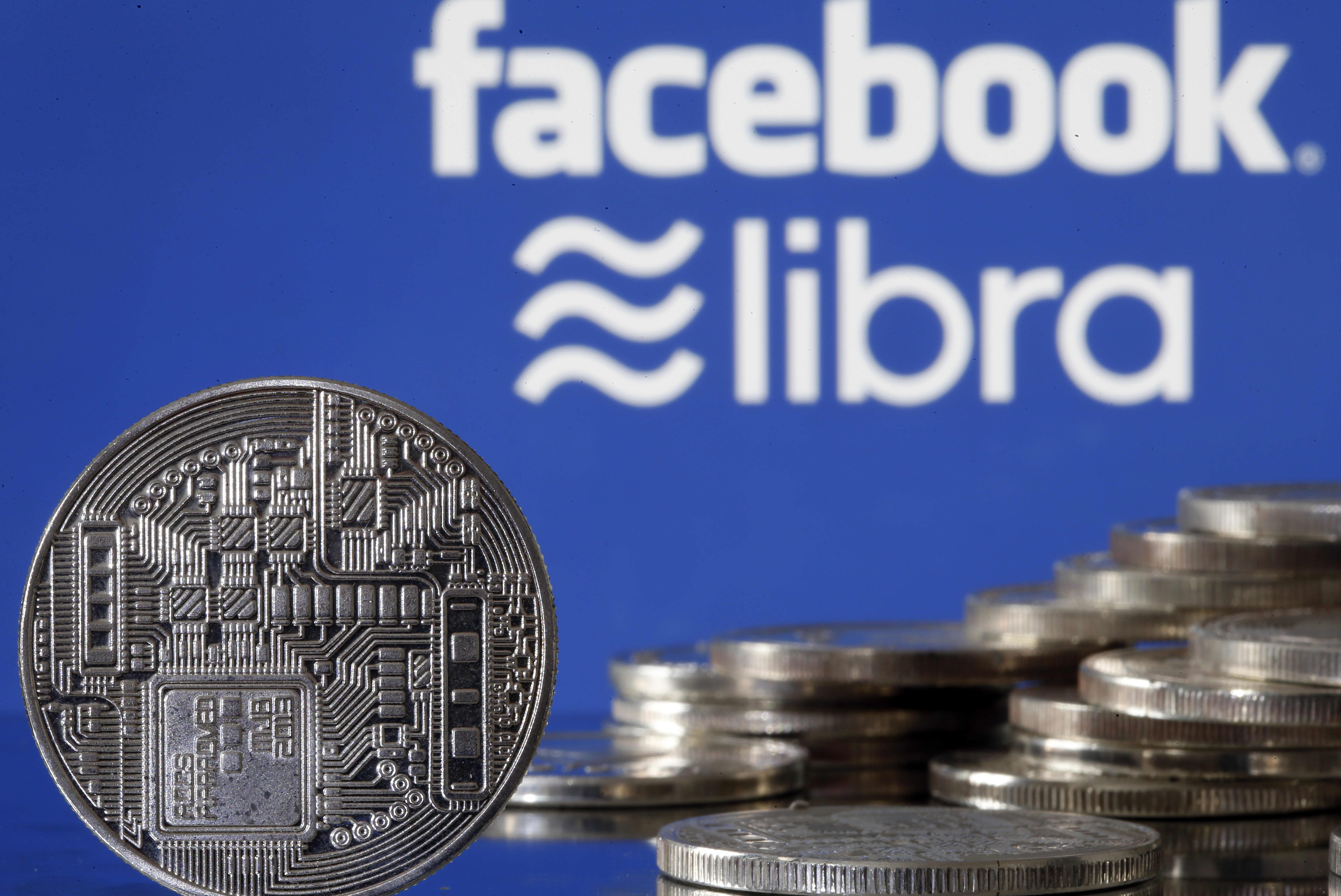 A visual representation of a cryptocurrency coin on display in front of the logos for Facebook and Libra. Chesnot | Getty Images Facebook has made headlines of late with its plans to create a cryptocurrency. The social media company has been forced to defend the project on Capitol Hill, amid regulatory concerns around data privacy and potential illegal usage, while the G-7 has warned it poses "serious" legal risks. It's an experiment in monetary systems for the digital age, and has inevitably been compared to popular cryptocurrencies like bitcoin. However, many experts question whether Libra can even be called a cryptocurrency. Other than the fact that they both come with a white paper and are referred to as cryptocurrencies, Libra and bitcoin are actually very different. Here's a rundown of the key differences between the two. Different technologyOne of the biggest differences lies in the underlying technology behind both currencies. With bitcoin, transactions are recorded anonymously on a public ledger known as the blockchain. It's essentially a database maintained by a network of computers, on which transactions are secured in such a way that makes it virtually impossible to tamper with. Libra also uses a form of blockchain, or distributed ledger technology. But unlike bitcoin, Libra's blockchain is permissioned — at least for now — meaning that transactions can only be added to it by a group of trusted parties. That's where the Libra Association, a Switzerland-based consortium of companies including Visa and Uber, comes in. Each of the nonprofit organization's members have invested a minimum of $10 million into the project. "Libra will create a centralized structure governed by an unelected 'association' composed exclusively of large institutions who have purchased their voting rights," said Ido Sadeh Man, founder and president of the Saga Foundation, a cryptocurrency firm that counts J.P. Morgan Chairman Jacob Frenkel as an advisor. It's different to bitcoin's network, which can be accessed and maintained by anyone with decent enough hardware and access to the internet. "Cryptocurrencies are defined by their lack of reliance on trusted intermediaries," Peter Van Valkenburgh, director of research at the cryptocurrency policy think-tank Coin Center, said in a recent blog post. "We believe that Libra is not a cryptocurrency because of its use of a permissioned ledger and its reliance on a trusted issuer to hold and manage a fund of assets that back the currency." Different use casesBitcoin's white paper describes the virtual currency as a peer-to-peer payment system, allowing people to exchange money without going through a bank. It's commonly used today as a form of investment, with the term "HODL" being a common slang phrase in the industry to describe buying and staying invested in the cryptocurrency for the long term. It's frequently been referred to as "digital gold. " Libra's primary purpose is to be used in cross-border payments and money transfers. The currency is tied to a basket of government-backed currencies and other assets, to avoid the volatile swings often seen in cryptocurrencies like bitcoin and ether. Referred to by many in the industry as a "stablecoin," Libra is aimed at maintaining a stable value. David Marcus, the Facebook executive leading the blockchain initiative, has previously said it will work "more like a traditional currency" than a cryptocurrency. "Bitcoin and Facebook's Libra both represent stages in the evolution of currency but in starkly different ways," Charles Hayter, co-founder and CEO of digital currency comparison platform CryptoCompare, told CNBC. "Bitcoin is permissionless, fully decentralized, deflationary and volatile. Libra is permissioned, more centralized, governed by supply and demand and pegged to fiat currencies." What Hayter means by "governed by supply and demand" is that Facebook and its partner companies can adjust the supply to match a quantity of other assets held in reserve, effectively maintaining a stable price even when demand changes. Bitcoin on the other hand has a fixed supply. The total number of bitcoins that will ever be minted is "hard-capped" at 21 million. "Bitcoin supply is fixed and cannot react to the market's demand," the Saga Foundation's Sadeh Man said. "Libras are created or burned when one of Libra's authorized resellers deposit or withdraw money from its reserve." Different regulatory questionsFacebook's currency has taken the spotlight when it comes to talk of regulating cryptocurrencies. But some worry the company's blockchain project could be lumped in with other digital assets by regulators. That would be problematic given the difference between Libra and a digital currency like bitcoin. Whereas bitcoin rules out the need for financial intermediaries, Libra's model is reliant on the entities which form the Libra Association, Coin Center's Van Valkenburgh said. "A system without intermediaries is a system without intermediary risk, and thus no need for regulation aimed at safeguarding against the types of risk presented by intermediaries," he said. The Libra Association currently consists of 28 founding members, according to the Libra white paper, and is hoping to reach 100 members by the time the currency launches. The token is slated for launch in the first half of 2020. Though bitcoin's network involves so-called "miners" who record transactions, it wouldn't make sense to regulated them as they aren't trusted custodians of user funds, Van Valkenburgh said. Cryptocurrency exchanges and wallets on the other hand do require regulatory oversight, he added. Questions around how Libra would fit into existing financial regulations were raised at Wednesday's hearing. Facebook's Marcus was grilled on whether Libra could be considered a financial security, which he said could not be the case. But Marcus said it could possibly be considered a commodity. Securities and Exchange Commission Chairman Jay Clayton last year told CNBC that cryptocurrencies like bitcoin could not be viewed as securities. Cryptocurrencies are "replacements for sovereign currencies" like the dollar and the euro, he said. Regardless, if Facebook and its partners do manage to overcome the regulatory hurdles that have accompanied Libra, the currency "will undoubtedly have an enormous impact on the global economy — possibly eclipsing that of bitcoin," CryptoCompare's Hayter said. For Andy Bryant, chief operating officer of cryptocurrency exchange bitFlyer's European business, Libra could start to convince people there are "other ways" of storing value than using fiat currencies like the U.S. dollar. "If that's all that Libra achieves, I think it will be a great step forward," he said.  |
| Watch Out Cryptocurrency Owners, The IRS Is On The Hunt - Forbes Posted: 31 Jul 2019 10:50 AM PDT  Shutterstock The massive tax bust of crypto owners has begun with the IRS mailing 10,000 letters to crypto account owners. These letters educate crypto account holders about the rules and tell taxpayers to review their tax reporting for crypto transactions to be sure they reported income correctly. If necessary, taxpayers should file amended tax returns and or late returns. These tax returns should be marked with the corresponding letter type (i.e., Letter 6173, 6174 or 6174-A) and mailed to a particular IRS address. In other words, these tax filings won't be a needle in the haystack and the IRS will take a close look. Many audits may follow. IRS Letter 6173 "We have information that you have or had one or more accounts containing virtual currency and may not have met your U.S. tax filing and reporting requirements for transactions involving virtual currency, which include cryptocurrency and non-crypto virtual currencies." The IRS might know there is unreported income based on tax information obtained through enforcement actions, which include the summons against U.S. Coinbase customers. You received the letter because you didn't file a tax return, which should have included virtual currency transactions. Alternatively, you filed a return but did not report virtual currency transactions. You must reply to this tax notice by submitting a correct late tax return or an amended return. If you disagree with the IRS, the letter requires a full explanation with a signed statement declared under penalties of perjury. Letter 6173 is a severe tax notice, and you should not don't dig yourself into a bigger hole with an incorrect reply. In some cases, perjury could be a felony. The letter states, "If we don't hear from you by the "respond by" date we may refer your tax account for examination." I wonder how the IRS will conduct its audits of virtual currency transactions. They will need a list of all coin exchanges and private wallets and probably have to use trade accounting software in the same way a taxpayer would. IRS Letter 6174 "We have information that you have or had one or more accounts containing virtual currency but may not know the requirements for reporting transactions involving virtual currency, which include cryptocurrency and non-crypto virtual currencies. After reviewing the (educational) information below, if you believe you didn't accurately report your virtual currency transactions on a federal income tax return, you should file amended returns or delinquent returns if you didn't file a return for one or more taxable years." The key phrase is that the taxpayer "may not know" crypto tax treatment. It sounds like the IRS does not have sufficient information indicating unreported income. Letter 6174 is an "educational letter," and it states, "you do not need to respond to this letter." If you received this tax notice, then you should review your crypto tax reporting and consider filing an amended tax return, if appropriate. Consider the IRS advice a warning shot across your bow. Letter 6174-A "We have information that you have or had one or more accounts containing virtual currency but may not have properly reported your transactions involving virtual currency, which include cryptocurrency and non-crypto virtual currencies. After reviewing the information below, if you believe you didn't accurately report your virtual currency transactions on a federal income tax return, you should file amended returns or delinquent returns if you didn't file a return for one or more taxable years. You do not need to respond to this letter." The critical phrase is "may not have properly reported." That's different from Letter 6173, which states "may not have met" your tax requirements. Letter 6174-A implies the taxpayer reported crypto transactions, but perhaps not in the proper way. For example, maybe the taxpayer used Schedule C (business income) instead of Form 8949 (capital gains). Perhaps they used like-kind exchanges, and the IRS might not allow that. Conversely, Letter 6173 indicates the taxpayer did not report crypto transactions at all. The IRS has various types of tax information for virtual currency account owners, and it selected the letter that best matched their knowledge base. The IRS is also using third-party services to obtain more tax information. It's wise to come clean now if you know you have errors in reporting crypto transactions. Historically, taxpayers have performed better in seeking abatement of penalties if they come forward to the IRS before getting busted first. Civil and criminal prosecution and FBAR reporting The IRS stressed, "Taxpayers who do not properly report the income tax consequences of virtual currency transactions are, when appropriate, liable for tax, penalties, and interest. In some cases, taxpayers could be subject to criminal prosecution." The IRS sent mob boss Al Capone to prison for tax evasion, which was less challenging than indicting him for unlawful bootlegging. Learn about accuracy-related penalties and what constitutes reasonable cause for reduction of penalties. The IRS Virtual Currency Compliance campaign reminds me of IRS initiatives to hunt down hidden offshore bank and brokerage accounts. FATCA legislation forced foreign banks into reporting on U.S. resident accounts. The IRS Offshore Voluntary Disclosure Program (OVDP) helped taxpayers come clean with voluntary reporting. That led to reduced penalties, which otherwise were onerous. Some tax cheats used foreign bank accounts to conceal business income from the IRS. Others protected assets with offshore structures and only did not correctly report portfolio income. In retrospect, it seems the IRS made a mistake in (unofficially) waiving foreign bank account report FinCEN 114 and Form 8938 for offshore virtual currency accounts. Virtual currency is "property," which did not meet the requirements for FinCEN 114 and Form 8938 (Statement of Specified Foreign Financial Assets). There are significant penalties for not filing FinCEN 114 (previously known as FBAR) on time with the U.S. Treasury. Once you put Treasury on notice of owning these accounts, it dissuades you from hiding income from the IRS on those same accounts. Coin-to-coin exchanges In the educational section of these IRS letters, it states that crypto-to-crypto trades (i.e., Bitcoin for Ether) are taxable capital gains. The letter does not mention Section 1031 or like-kind exchanges being allowed on pre-2018 trades. (The new tax law TCJA restricted like-kind exchanges to real property only, starting in 2018.) Many crypto traders did not report deferred capital gains on coin-to-coin trades. Some may have, but they omitted the required Form 8824. I've questioned whether coin-to-coin trades qualify for like-kind exchange treatment in years before 2018. Different types of virtual currencies might not be eligible as like-kind property, and coin exchanges are not qualified intermediaries. Multi-party like-kind exchanges require both. Tax information statements and trade accounting The IRS letters say to report all transactions whether tax information statements (Form 1099) were sent, or not, for crypto accounts held in the U.S., or abroad. Cryptocurrencies are "property," not a "security," so it's not a "covered security" for purposes of 1099-B reporting. Coinbase, the largest U.S. crypto exchange, appeased the IRS during their fight for obtaining taxpayer information, by issuing a Form 1099-K for larger accounts. The IRS intended Form 1099-K for third-party network transactions for merchants; not traders or investors. Only U.S. exchanges might provide 1099-Ks. Coinbase also provided capital gain and loss reports for later years. Taxpayers should consider using a trade accounting solution or software program to download virtual currency transactions from all coin exchanges and private wallets. Many crypto owners have accounts around the world, and accounting issues are more challenging when trading on margin. The IRS will likely use this same software in an exam. Additional IRS guidance coming soon The IRS keeps promising to publish further advice on crypto tax treatment soon. Why did they send 10,000 education letters if they plan to update their education guidance shortly? Perhaps, it would have been better to publish updated guidance before mailing them. This letter campaign seems a bit like a fishing expedition: The IRS wants more tax returns to analyze before it tackles tax treatment issues further. Additional guidance is expected to address like-kind exchanges; chain splits, permissible accounting methods, wash sales, Section 475, and more. The AICPA issued a letter containing suggested questions and answers. The basics are clear, and the delay in additional guidance is no excuse for non-compliance. IRS data analytics The IRS said it would continue to use data analytics, and perhaps other blockchain technology to uncover more non-compliant crypto taxpayers. The IRS successfully used an independent company Chainalysis on recovering tax information from U.S. Coinbase customers. That may have been one of the sources for this first batch of 10,000 account letters. What tax evaders didn't initially realize is that virtual currencies may not be an ideal medium of exchange for concealing income and assets from tax authorities. Unlike using cash (dollar bills), blockchain is a distributed ledger which is available to the public. Non-crypto virtual currency may have a private company centralized ledger, but the IRS might be able to get that through a summons, too. AI, blockchain tools, and crypto trade accounting programs will help the IRS bust crypto tax evaders and taxpayers who are honest but misinformed. Takeaway This IRS letter campaign is just the beginning of virtual currency enforcement activities to come. You should take this opportunity to get fully educated, review your reporting, and be sure you are tax compliant. Pay tax liabilities and interest expenses, and then seek abatement of penalties when assessed. Some crypto users might try to claim ignorance or argue they received terrible tax advice. Others might assert that the crypto tax rules were too vague and uncertain at the time of filing. Some tax treatment issues are unknown (i.e., like-kind exchanges and hard forks), but the basics are clear. After receiving these education letters, which are warning shots, there are no grounds for continued non-compliance. Consult a crypto tax expert immediately after receiving any of the above IRS letters. The CPA can reply to Letter 6173 soon and request more time to file amended returns. The 2018 tax return deadlines are coming up on September 15, 2019, for entities, and October 15 for individuals. Plan to work with your CPA after those dates on amended tax return filings. Breaking news and more resources IRS IR-2019-132: IRS has begun sending letters to virtual currency owners advising them to pay back taxes, file amended returns; part of agency's larger efforts. WSJ quotes my partner in IRS Sending Warning Letters to More Than 10,000 Cryptocurrency Holders. "When it comes to preparing tax returns involving cryptocurrencies, Darren Neuschwander, a certified public accountant, said many tax preparers are frustrated because the IRS has long promised new guidance on cryptocurrencies that it hasn't yet released." "It's ironic that the IRS is issuing these letters because we're still waiting to know more rules," he said. IRS Sends Out 10,000 Letters to Virtual Currency Investors, Some of Which Demand a Response, By Ed Zollars CPA for Kaplan Financial Education. Blockchain Analytics Firm Chainalysis Outlines User Data Policy Amid Coinbase Allegations in CoinTelegraph. The IRS Has Special Software to Find Bitcoin Tax Cheats. Fortune.com GreenTraderTax cryptocurrency resources: Blog posts on cryptocurrencies Trade accounting service for cryptocurrencies Darren Neuschwander CPA contributed to this blog post.  |
| You are subscribed to email updates from "what is cryptocurrency" - Google News. To stop receiving these emails, you may unsubscribe now. | Email delivery powered by Google |
| Google, 1600 Amphitheatre Parkway, Mountain View, CA 94043, United States | |


Comments
Post a Comment