"ninjatrader margin" - Google News
[unable to retrieve full-text content] NinjaTrader Review 2026 Investing.com
bitcoin |
| The Bank Of England Governor Proposed A Radical Competitor To Bitcoin And The U.S. Dollar - Forbes Posted: 30 Aug 2019 09:30 PM PDT Bitcoin and cryptocurrency competitors are in vogue at the moment with both social media giant Facebook and China planning their own digital currency projects. The bitcoin price, despite suddenly plummeting this week, has climbed this year largely because the likes of Facebook and South Korean technology behemoth Samsung have tacitly endorsed bitcoin and cryptocurrency technology, helping it to somewhat recover from a disastrous 2018. Now, Bank of England governor Mark Carney, who has previously poured scorn on bitcoin and its crypto peers, has said a global digital currency, which sounds remarkably like bitcoin, could replace the U.S. dollar as the world's reserve currency.  The Bank of England governor Mark Carney has suggested governments work together to create a global digital currency--something which could rival bitcoin and other cryptocurrencies. Getty Images"[A digital currency] could dampen the domineering influence of the U.S. dollar on global trade," Carney said in a speech at the gathering of central bankers from around the world in Jackson Hole, Wyoming, it was first reported by the Guardian, a U.K. newspaper. The U.S. dollar is stockpiled by governments around the world to help protect against any downturns in the U.S. economy. "If the share of trade invoiced in [a digital currency] were to rise, shocks in the U.S. would have less potent spillovers through exchange rates, and trade would become less synchronized across countries," Carney added. Carney's comments follow attempts by Facebook to win over global financial regulators to its libra cryptocurrency project, expected to launch some time next year. Facebook has said it wants libra to act as a global currency and is trying to launch the coin in as many countries as possible, though it's thought to have a focus on emerging markets. Earlier this month, a senior official at China's central bank said it's "almost ready" to issue its own sovereign digital currency, with new research out this week suggesting it could eliminate the need for bank accounts. "The dollar's influence on global financial conditions could similarly decline if a financial architecture developed around the new [digital currency] and it displaced the dollar's dominance in credit markets," Carney added. Bitcoin enthusiasts were, of course, quick to point out bitcoin would fulfill many of Carney's requirements. "Bitcoin largely fits the description of what [Carney] is looking for—something 'removed' from country borders and independent of country-specific interest rate policies," Richard Galvin, a former investment banker at JPMorgan Chase and now chief executive of Digital Asset Capital Management, told Bloomberg, a financial newswire.  The bitcoin price has climbed so far this year as interest in bitcoin and cryptocurrencies from some of the world's biggest technology companies has grown. CoindeskCarney has publicly criticized bitcoin however, last year warning bitcoin could be heading for a "pretty brutal reckoning," and that cryptocurrencies have "all the hallmarks of a bubble." Despite Carney's dislike of bitcoin, the Bank of England earlier this year said it welcomed Facebook's libra initiative, adding it could be a useful addition to trading goods and services. Carney's comments are though likely to put him at odds with U.S. president Donald Trump who recently launched a scathing attack on bitcoin and cryptocurrencies in light of Facebook's plans, branding them "unregulated crypto assets" and based on "thin air." "We have only one real currency in the U.S.A., and it is stronger than ever, both dependable and reliable," Trump said. "It is by far the most dominant currency anywhere in the world, and it will always stay that way. It is called the United States dollar!"  |
| This Blockchain Executive Thinks We're Seeing a Bitcoin Revival - Forbes Posted: 30 Aug 2019 02:31 PM PDT When David Wachsman founded Wachsman, a global blockchain services firm, he had no idea it would become a leading blockchain industry company. As the CEO of perhaps the industry's largest PR firm, he's followed the industry closely. And today, he is seeing one particular trend. "We're seeing a revival of Bitcoin," said Wachsman, as I spoke with him this past spring. "It is the oldest blockchain and is in many ways one of the slowest blockchains; the one that has certainly had its challenges in terms of upgrades. But Bitcoin is experiencing an enormous social revival in our industry. It is amazing. Bitcoin is reliable, and that reliability has turned out to be something incredibly sexy." Wachsman, whose Manhattan-based firm covers topics such as making cryptocurrency palatable for a mainstream audience on its blog, believes there is a general distrust of tokens. "And then, there's this old reliable one," he says, referring to Bitcoin. "It is the tortoise and the hare story. The tortoise, which is Bitcoin, seems to be racing ahead of the hare, which is all of these other blockchains, for the moment." There are other reasons. "As people look at how crypto has evolved thus far, they, unfortunately, see that there are not a lot of use cases that are at work today," Wachsman observes. "We don't have a lot of consumer grade products right now. Today, you can rarely use crypto outside of payments. That's what it comes down to, and Bitcoin works really well as a payment method. There's never been a transaction to my knowledge that's ever been interrupted. It's not really possible," he says.  A picture of the Bitcoin logo behind the stage at Bitcoin Conference 2019, where I caught up with David Wachsman to discuss the Bitcoin revival. Justin O'Connell"And I think that the trust in bitcoin has really eclipsed the interest level in many of these other new blockchains," says Wachsman. "So, I think that's going to probably continue for a while up until something radically different occurs." Wachsman says Bitcoin also enjoys other advantages. "It's been well established that Bitcoin is not presently considered a financial security – or at least that's what it seems – but I don't think that's the reason [for the Bitcoin revival]," says Wachsman. "That's been a known factor for quite some time. Perhaps, it's that great companies, like RSK, are building on top of bitcoin and people are seeing it." Wachsman mentions the price rise in 2017, noting that it brought a lot of newcomers into the blockchain industry. Many have now lost interest for the moment. "But, as for the people who have always been interested in the industry and the technology, I don't know any who are not interested in Bitcoin. So, the average person in the blockchain or crypto space likes Bitcoin more just because they have always liked Bitcoin. The new people who have come on, who really get the technology – who understand the power of the blockchain – all of them in some way, shape or form respect Bitcoin." What can the industry learn from the Bitcoin renaissance? "Ubiquity matters," says Wachsman. "Bitcoin has widespread brand recognition, and that has been really helpful. We have seen that brand critical mass is meaningful and can have staying power. Bitcoin remains interesting to people. That's because it is trustworthy, and it is understood that the technology is reliable for doing the most important thing in the blockchain space today, which is making payments. The coins go from A to B, and get there every time." He adds: "The lesson we can learn is that reliability matters most; that trust is meaningful. And Bitcoin is both trustworthy and reliable and everyone else is striving to be the same." In June, I caught up with Wachsman at the Bitcoin Conference 2019 in San Francisco – Bitcoin had increased 21% on the day. I asked him about Bitcoin's revival and its impact on business at his firm. "We have seen a lot more Bitcoin companies looking to do marketing," he said. "We are seeing a resurgence of companies that are primarily Bitcoin companies, whether they're in the mining space, whether they're wallet providers or whether they're exchanges." He noted that, when I first spoke with him just a couple months prior, Bitcoin was a fraction of the price. "The Bitcoin resurgence is very real and much more than a theory," he said. Amid the Bitcoin renewal, Wachsman noticed there are a lot of cryptocurrency exchanges in the industry he had not yet heard of. "It is fascinating to talk to these exchanges," he said. "Some of them are less sophisticated than others, but the resurgence of Bitcoin is making people wonder, 'Where can I get it?' And I hope people are also wondering, `Where can I spend it?'"  |
| Bitcoin Sinks To 2-Month Low; China Moves Forward With State-Backed Cryptocurrency - Forbes Posted: 31 Aug 2019 06:00 AM PDT Get Forbes' top crypto and blockchain stories delivered to your inbox every Friday for the latest news on bitcoin, other major cryptocurrencies and enterprise blockchain adoption. 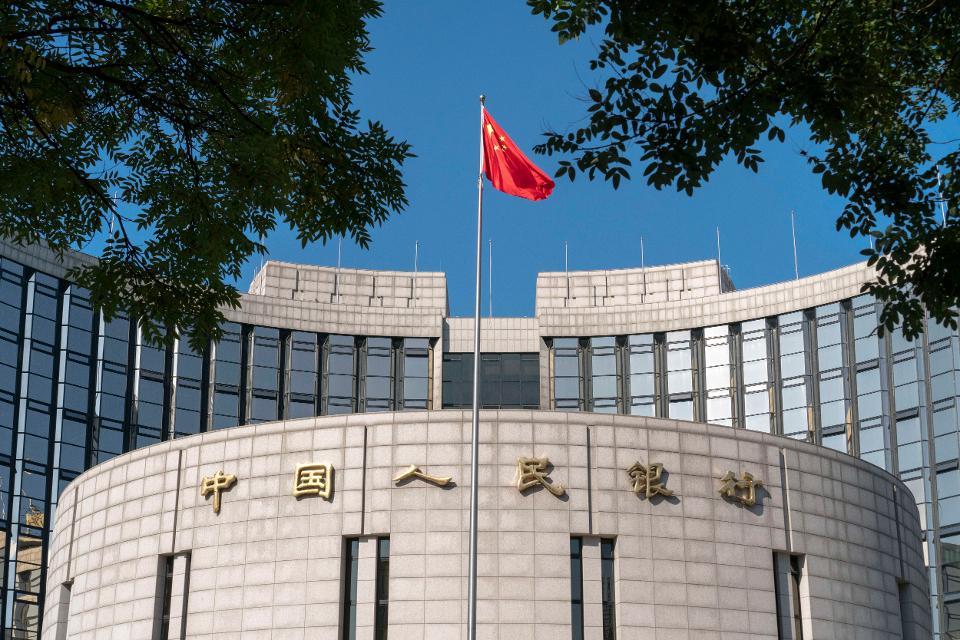 At the People's Bank of China, research into the technology behind bitcoin is about to culminate in an entirely new kind of cryptocurrency. Zhang Peng/Lightrocket Via Getty ImagesCRYPTO MARKETSThe price of every major cryptocurrency took a sharp nosedive Wednesday afternoon, as bitcoin dropped well below the $10,000 threshold to its lowest level of the summer. Ethereum, litecoin and Ripple's XRP also sank between 5% and 10% in a matter of minutes. Investors are left wondering whether the sudden fall represents a cheap buying opportunity or a critical blow to bitcoin. ALL EYES ON CHINAForbes confirmed this week that China's central bank will launch a state-backed cryptocurrency and issue it to seven institutions, including Alibaba and Tencent, in the coming months. It could be available as soon as November 11, China's busiest shopping day, and may eventually be available to spenders internationally in the Western world. "China's strategic plan is to integrate more closely with the rest of the world. Cryptocurrency is just one of the means to have a more internationalized renminbi. It's all strategic," says Charles Liu, chairman of private equity firm HAO International. "ASLEEP AT THE WHEEL"Cameron and Tyler Winklevoss are spending plenty of time in the spotlight to promote the book Bitcoin Billionaires, which recounts how they built their fortunes as early investors, and in an interview with CNN last week, the twins said Wall Street has been "asleep at the wheel" during bitcoin's rise to prominence. "Unlike the internet, which you couldn't buy a piece of, you can actually buy a piece of this new internet of money," Tyler Winklevoss said, promoting bitcoin to potential new investors. ENTERPRISEThe Hyperledger consortium voted unanimously Thursday morning to approve an open-source codebase called Hyperledger Besu, its first code that links businesses directly to the public ethereum blockchain. It's similar to Pantheon, another Ethereum enterprise solution launched by ConsenSys this spring, but Hyperledger's version is expected to be easier to integrate with existing codebases. Also, more and more companies interested in adopting blockchain are soliciting the services of VMware, a publicly traded company specializing in cloud computing and digital workspaces, to help them get started. Facebook plans to house a variant of a mechanism VMware developed with its libra cryptocurrency. ELSEWHEREHe's not Satoshi, he's a very naughty boy. [Financial Times] A Crypto Miner Cuts Costs and Rides Bitcoin's Price Rise. [Wall Street Journal] Coinbase Study Says 56% of Top 50 Universities Have Crypto Classes [CoinDesk]  |
| Bitcoin Price: 4 Key Similarities to Previous Bull Market Corrections - Cointelegraph Posted: 31 Aug 2019 07:32 AM PDT While Bakkt clients will be able to deposit their funds into the Bakkt Warehouse next week on Sept. 6, Bitcoin price is trending downwards after falling below $10,000 in the run-up to the event. So is this already priced in or the market cycles are just repeating themselves? Let's take a look at some key similarities to previous bull market cycles. Similarities I & II: 100-week MA & 21-week EMA providing support
BTC/USD Weekly chart. Source: Tradingview A common discussion lately on Crypto Twitter suggests that there's a confluence between the so-called Bitcoin (BTC) price "bubble" top of 2017 and the last top at the end of July at $13,935. In a sense, parabolic movements tend to repeat the same stages over and over again. However, there are some substantial differences between them. The top of 2017 came at the end of a market cycle, which essentially started with the confirmation of the 100-week Moving Average (MA) and 21-week Exponential Moving Average (EMA) during January 2016. However, the top of July 2019 was essentially the first peak above the 100-week MA and did not face the euphoria comparable to the period in December 2017. So, are they comparable? Basically, during the whole bull market of 2016–2017 there were several parabolic movements ending in a retracement. The start of this was the period during Q4 2015 and the beginning of January 2016 through which Bitcoin price ended the bear market with a parabolic move and found support at the 100-week MA and 21-week EMA. After this confirmation the market has seen several corrections of 30-40%, which are quite healthy for an upwards trending market. With that in mind, it makes more sense to compare the previous parabolic movement towards the first parabolic movement coming out of the bear market in 2015, as that was the kickstart of a new cycle. Relying on the chart, this could mean that Bitcoin price could face another test of the 100-week MA or the 21-week EMA to confirm the bullish perspective and face a period of accumulation prior to the halving event. The past halving events on Litecoin and Bitcoin saw upwards price movements a few months prior to the actual event. If history repeats itself, we could see some upwards movements in Q1 of 2020. Similarity III: 200-day Moving Average support
BTC/USD Daily chart. Source: Tradingview Another indicator of a bullish market is the support of the 200-day MA. During the previous cycle, Bitcoin always found support on the 200-day MA and, during the later phases, also on the 100 MA, which is currently moving around $7,500. Meanwhile, the latest BTC price drop below $10K means it just lost the 100 MA, which is comparable to the start of the last cycle in January 2016. Similarity IV: Altcoins getting crushed
Altcoin dominance. Source: Cointrader The last few months haven't been good to altcoins. While Bitcoin price is moving upwards and continues to range, altcoin investors are punished more and more by the market. This leads to the fear of buying altcoins and we are getting stuck in a vicious cycle. However, we have been here before. Back in 2015 — while Bitcoin was moving from $196 to $505 — altcoins didn't follow suit. Instead, they began to move when Bitcoin price bottomed out of its first parabolic run on January 15, 2016 (the touch of the 100-week MA and 21-week MA confirming the bottom). If we take a look at an altcoin market cap dominance chart, it's easy to see that it has retraced down to the lowest level in two years, while the RSI is showing a level of 22. This means that altcoins were being sold heavily during the past period. Notably, a potential support level and a trendline are coming into play. Comparable to the beginning of 2016, in which the dominance of altcoins fell from 16% to 8% — this occurred prior to big upwards movements. For example, Ether (ETH) went up by 1700% in the months after, Vertcoin went up by 800%, etc. Comparing these two analyses with the technical point of view of the market, it is to be expected that Bitcoin needs a natural period of accumulation, through which altcoins will eventually catch up and move alongside with BTC/USD. To date, altcoins have been following Bitcoin (e.g. Bitcoin price all-time high in December 2017, altcoin all-time high in January/February 2018). In other words, this leads me to believe that altcoins will start to move as soon as Bitcoin is ranging/bottomed out from this parabolic move. Total market cap excluding BTC
Total crypto market cap excluding Bitcoin. Source: Tradingview The total market capitalization (excluding Bitcoin) has shown a move upwards to the $125 billion area of resistance, which acted as a support during 2018 and retraced down since then. According to the chart, it's currently testing an important level. If the market is able to find support here (at $62–66 billion), the old resistance of November/December 2018 will act as a support. This will lead towards a new higher low, and potentially the disbelief phase and a new cycle. The current market capitalization of altcoins is $66 billion, which is equal to the market capitalization of altcoins in March 2019 when the price of Bitcoin was $4,000. Simply put, this is the ultimate carnage for altcoin holders. What scenarios are there?
BTC/USD. Source: Tradingview At this point, Bitcoin price has broken an important trendline. This caused the price to drop from $10,200 to the support level of $9,300, which is being tested for the third time as we speak. Bullish scenario
BTC/USD bullish scenario. Source: Tradingview In a bullish scenario, the price has to break the $9,800 level (old support before the dropdown) and reclaim that as support. If Bitcoin is able to do so, then we're aiming at $10,800 again (trendline and horizontal resistance zone). Bearish scenario
BTC/USD bearish scenario. Source: Tradingview If Bitcoin won't be able to break the $9,800 level again and turns it into resistance (or the $9,650 zone), the lower support levels at $8,900 and the possible area around $8,500 are likely to be tested, given the prior analysis of the 100-week MA ranging around $8,500 and the CME futures gap at $8,500. In case of a bearish breakdown, it might be expected that the drop will be quite short. If we turn to Crypto Twitter, the majority tends to believe in a move towards $8,500. This could also lead to a very brief drop, which can be bought up quickly, or to a move that never happens on that level (frontrunning). Of course, it's quite common that when the majority expects a move to happen, the exact opposite occurs. All in all, the movements of Bitcoin price are seemingly natural and healthy for an upwards trending market, and offer opportunities to buy the dip. The views and opinions expressed here are solely those of the author and do not necessarily reflect the views of Cointelegraph. Every investment and trading move involves risk. You should conduct your own research when making a decision.  |
| Bitcoin price predictions turn positive as cryptocurrency market calms - The Independent Posted: 30 Aug 2019 04:12 AM PDT  A tumultuous few weeks for bitcoin may be coming to an end after cryptocurrency markets experienced an exceptionally quiet day of trading. Over the last 24 hours, the price of bitcoin shifted by less than 1 per cent, as stabilising forces also saw ethereum and bitcoin cash move by a similarly fine margin. Bitcoin settled at around the $9,600 - well below the $10,000 milestone that one cryptocurrency analyst recently described as the "new normal bottom" - following a flash crash that saw $10 billion wiped from its overall value in the space of just 30 minutes. Despite this, many experts remained hopeful that bitcoin remains on an upward trajectory and could still go on to reach record highs before the end of the year. One investor noted on Twitter that the recent price crash did not take bitcoin off its course of setting higher monthly lows since February 2019. The price of bitcoin has trebled in price over the last seven months, though still remains a long way off its record high of close to $20,000, which it reached in December 2017. 1/8 Satoshi Nakamoto creates the first bitcoin block in 2009On 3 January, 2009, the genesis block of bitcoin appeared. It came less than a year after the pseudonymous creator Satoshi Nakamoto detailed the cryptocurrency in a paper titled 'Bitcoin: A peer-to-Peer Electronic Cash System' Reuters 2/8 Bitcoin is used as a currency for the first timeOn 22 May, 2010, the first ever real-world bitcoin transaction took place. Lazlo Hanyecz bought two pizzas for 10,000 bitcoins – the equivalent of $90 million at today's prices Lazlo Hanyecz 3/8 Silk Road opens for businessBitcoin soon gained notoriety for its use on the dark web. The Silk Road marketplace, established in 2011, was the first of hundreds of sites to offer illegal drugs and services in exchange for bitcoin 4/8 The first bitcoin ATM appearsOn 29 October, 2013, the first ever bitcoin ATM was installed in a coffee shop in Vancouver, Canada. The machine allowed people to exchange bitcoins for cash REUTERS/Dimitris Michalakis 5/8 The fall of MtGoxThe world's biggest bitcoin exchange, MtGox, filed for bankruptcy in February 2014 after losing almost 750,000 of its customers bitcoins. At the time, this was around 7 per cent of all bitcoins and the market inevitably crashed Getty Images 6/8 Would the real Satoshi Nakamoto please stand upIn 2015, Australian police raided the home of Craig Wright after the entrepreneur claimed he was Satoshi Nakamoto. He later rescinded the claim Getty Images 7/8 Bitcoin's big splitOn 1 August, 2017, an unresolvable dispute within the bitcoin community saw the network split. The fork of bitcoin's underlying blockchain technology spawned a new cryptocurrency: Bitcoin cash REUTERS 8/8 Bitcoin's price sky rocketsTowards the end of 2017, the price of bitcoin surged to almost $20,000. This represented a 1,300 per cent increase from its price at the start of the year Reuters 1/8 Satoshi Nakamoto creates the first bitcoin block in 2009On 3 January, 2009, the genesis block of bitcoin appeared. It came less than a year after the pseudonymous creator Satoshi Nakamoto detailed the cryptocurrency in a paper titled 'Bitcoin: A peer-to-Peer Electronic Cash System' Reuters 2/8 Bitcoin is used as a currency for the first timeOn 22 May, 2010, the first ever real-world bitcoin transaction took place. Lazlo Hanyecz bought two pizzas for 10,000 bitcoins – the equivalent of $90 million at today's prices Lazlo Hanyecz 3/8 Silk Road opens for businessBitcoin soon gained notoriety for its use on the dark web. The Silk Road marketplace, established in 2011, was the first of hundreds of sites to offer illegal drugs and services in exchange for bitcoin 4/8 The first bitcoin ATM appearsOn 29 October, 2013, the first ever bitcoin ATM was installed in a coffee shop in Vancouver, Canada. The machine allowed people to exchange bitcoins for cash REUTERS/Dimitris Michalakis 5/8 The fall of MtGoxThe world's biggest bitcoin exchange, MtGox, filed for bankruptcy in February 2014 after losing almost 750,000 of its customers bitcoins. At the time, this was around 7 per cent of all bitcoins and the market inevitably crashed Getty Images 6/8 Would the real Satoshi Nakamoto please stand upIn 2015, Australian police raided the home of Craig Wright after the entrepreneur claimed he was Satoshi Nakamoto. He later rescinded the claim Getty Images 7/8 Bitcoin's big splitOn 1 August, 2017, an unresolvable dispute within the bitcoin community saw the network split. The fork of bitcoin's underlying blockchain technology spawned a new cryptocurrency: Bitcoin cash REUTERS 8/8 Bitcoin's price sky rocketsTowards the end of 2017, the price of bitcoin surged to almost $20,000. This represented a 1,300 per cent increase from its price at the start of the year Reuters Simon Peters, an analyst at online trading platform eToro, explained that the recent dip may simply be as a result of a batch of bitcoin futures contracts that were set to expire. "Chicago Mercantile Exchange Bitcoin futures contracts are set to expire tomorrow, which historically has prompted trading activity within the cash market," he told The Independent. "It's possible that investors are selling off now to insulate themselves from greater losses in the coming days. Furthermore, this downward momentum has been exacerbated by low trading volumes over the last week, which has meant that a relatively small number of big trades have been able to move the needle sharply." Several prominent figures within the cryptocurrency community have stood by their previous positive predictions, with cyber security pioneer John McAfee continuing to stand by his bold bet that bitcoin will hit $500,000 in 2020. Such a claim seems modest when compared to other historic predictions. Computer scientist Hal Finney, who some believe may be the pseudonymous creator of bitcoin Satoshi Nakamoto, was perhaps the most bullish about bitcoin's price potential. One week after the first ever genesis block of bitcoin was created in January 2009, Finney published his thoughts on what the value of bitcoin would be if it went on to replace the US dollar as the main global currency. "Imagine that bitcoin is successful and becomes the dominant payment system in use throughout the world," he wrote. "Then the total value of the currency should be equal to the total value of all the wealth in the world. Current estimates of total worldwide household wealth that I have found range from $100 trillion to $300 trillion. With 20 million [bitcoin], that gives each coin a value of about $10 million."  |
| You are subscribed to email updates from "bitcoin" - Google News. To stop receiving these emails, you may unsubscribe now. | Email delivery powered by Google |
| Google, 1600 Amphitheatre Parkway, Mountain View, CA 94043, United States | |


Comments
Post a Comment