"ninjatrader margin" - Google News
[unable to retrieve full-text content] NinjaTrader Review 2026 Investing.com
China May Soon Have Its First Blockchain Exchange-Traded Fund - Coindesk |
| China May Soon Have Its First Blockchain Exchange-Traded Fund - Coindesk Posted: 29 Dec 2019 10:00 PM PST  China Securities Regulatory Commission (CSRC), the country's financial watchdog, has recently received an application for listing an exchange-traded fund (ETF) that will track blockchain-related stocks as underlying assets. Dubbed Penghua Shenzhen Stocks Blockchain ETF, the application was filed by Shenzhen-based asset management firm Penghua Fund and was accepted by the CSRC on Dec. 24, according to the regulator's disclosure. The proposed ETF aims to track and reflect the performance of Shenzhen-listed public stocks that have businesses in the blockchain industry. Based on a report from Shanghai Securities News on Thursday, if the application received final approval by the CSRC it would be the country's first completely blockchain-themed ETF open to public investors. The application was received at the same time the Shenzhen Stock Exchange rolled out a Blockchain 50 Index comprised of 50 stocks listed on the exchange that have entered the blockchain space. The Shenzhen exchange said in an announcement on Dec. 24 the index tracks those that are involved in different aspects of the blockchain ecosystem and selects the top 50 by market capitalization. The current index list includes software companies, banks including Ping An Bank, as well as internet companies that entered cryptocurrency mining such as Wholeasy, which invested $80 million in bitcoin miners in 2018. Disclosure Read MoreThe leader in blockchain news, CoinDesk is a media outlet that strives for the highest journalistic standards and abides by a strict set of editorial policies. CoinDesk is an independent operating subsidiary of Digital Currency Group, which invests in cryptocurrencies and blockchain startups.  |
| 2010s In Bitcoin: The Year 2018 - Forbes Posted: 31 Dec 2019 12:54 PM PST I'm reviewing the 2010s in Bitcoin. This is the story about 2018 in Bitcoin. Read about 2017 here. In terms of price, 2018 represents Bitcoin's worst year on record. Bitcoin's correction from nearly $20,000 at the end of 2017 to just above $3,000 by the end of the year dominated headlines. From January 6 to February 6, the price of Bitcoin fell about 65 percent. By November 26, the price had declined more than 80% from its December 2017 peak. The BadOut of the gate in 2018, news from the financial industry in regard to Bitcoin was not great. Stripe, which helps businesses conduct financial transactions online and became the first big payments company to accept Bitcoin in 2014, ceased in January supporting Bitcoin. The company said Bitcoin wasn't being used to make payments, fewer merchants wanted to accept the cryptocurrency, and cited rising fees and longer transaction times as reasons for the decision. Bitcoin was "better-suited to being an asset than being a means of exchange," Stripe said. Bank of America, Citigroup, and J.P Morgan Chase announced in February they would no longer allow Bitcoin and other cryptocurrencies to be purchased with their credit cards, also. Lloyds Banking Group and Virgin Money joined the ban not long thereafter. News out of South Korea put a damper on the Bitcoin price, too. After senior government ministers suggested they might ban bitcoin trading, the country announced in January that Bitcoin traders would need to identify themselves. South Korea planned to require local banks to implement a real-name system for cryptocurrency trading. Financial Services Commission Vice Chair Kim Yong-beom said the new measures were designed, in part, to prevent foreigners residing outside South Korea without local bank accounts and minors younger than 19 from buying or selling bitcoins. 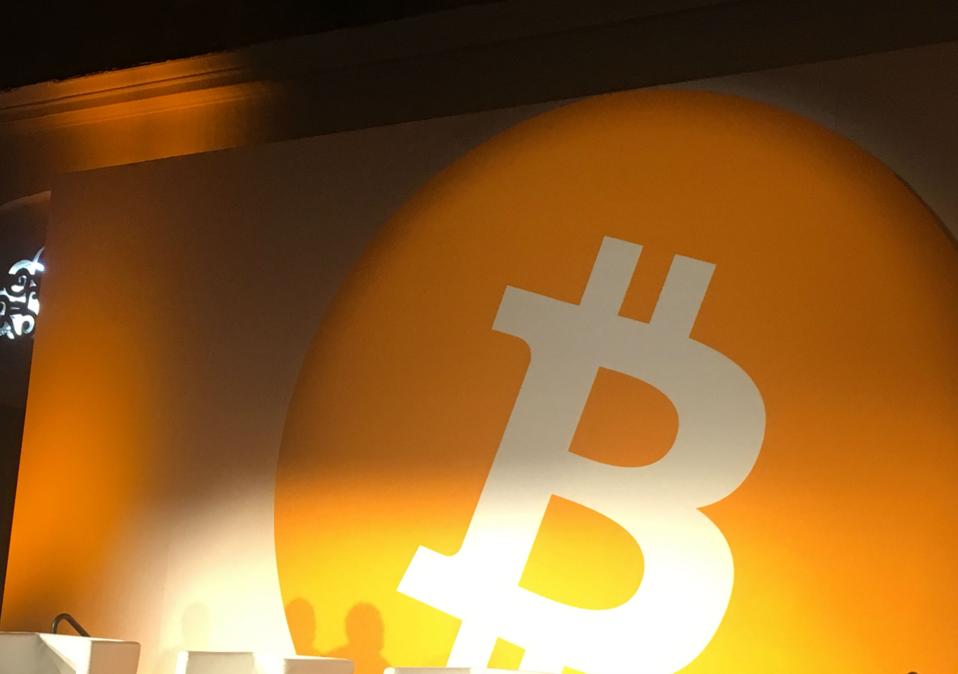 The backdrop at Bitcoin Conference 2019. Author"We expect that crypto currency exchanges that are in danger of being exploited for money laundering will be thrown out of the market," Kim said. 2018 entailed some notable hacks. In February 2018, hackers stole about $195 million in cryptocurrency from BitGrail. In June 2018, hackers made off with approximately $40 million in cryptocurrency from Coinrail, as well as $30 million from the exchange Bithumb. Bitcoin Core developers patched in September a vulnerability in the Bitcoin Core code, which is not the Bitcoin protocol itself but rather the original wallet developed for the software, that could have allowed a malicious user to crash the network. The bug was described as "very scary", "major", and one of the "top three or four" serious bugs ever discovered in Bitcoin. "A very scary bug in Bitcoin Core has just been fixed which could have crashed a huge chunk of the Bitcoin network if exploited by any rogue miners," wrote popular Twitter account CobraBitcoin. It was perhaps the biggest vulnerability to the network since in 2013 the Bitcoin blockchain unintentionally split into two separate chains. "Major bug in Bitcoin Core, that can cause a total network fracture for BTC," tweeted associate professor of computer science at Cornell University, Emin Gün Sirer. "Empirically, bugs like this are found regularly in every coin. No implementation has been shown to be superior to others. All noise to the contrary is false marketing." The professor also spoke to VICE about the vulnerability. "For less than $80,000, you could have brought down the entire network," Sirer told VICE. "That is less money than what a lot of entities would pay for a 0-day attack on many systems. There are many motivated people like this, and they could have brought the network down." Sirer added: "The fact that lots of people are using something doesn't mean they're critically looking at its code, or that they're not blind to fundamental mistakes. The one thing that does help is to have multiple versions of the same software." The GoodBut, Bitcoin received a vote of confidence from an influential venture capitalist. Facebook investor, and PayPal co-founder Peter Thiel, expressed in March his confidence in Bitcoin compared to other cryptocurrency. "I would be long bitcoin, and neutral to skeptical of just about everything else at this point with a few possible exceptions," Thiel said. "There will be one online equivalent to gold, and the one you'd bet on would be the biggest." But, he doesn't see Bitcoin as useful for payments. "I'm not talking about a new payments system," Thiel said. "It's like bars of gold in a vault that never move, and it's a sort of hedge of sorts against the whole world falling apart." He did say, however, there is a 50 to 80 percent chance that Bitcoin becomes worthless. Consternation over China's dominance in the Bitcoin mining space started to be alleviated in 2018, as Bitcoin mining in North America became more common. Dallas News reported in July that Chinese mining firm BitMain opened a cryptocurrency mining operation in Texas. Wenatchee, Washington, too, became better known for its inexpensive electricity compared to the rest of the company. Cash App, founded by Twitter's Jack Dorsey, who is one of Bitcoin's most famous proponents, announced in August that it would accept Bitcoin across all 50 states. "Red, white, and bitcoin," Cash App tweeted. "Now you can use Cash App to buy bitcoin in all 50 states." The operator of the New York Stock Exchange, the International Continental Exchange, announced Bakkt, a futures and custody platform. The company would offer margin-less and deliverable futures trading. Investors included Boston Consulting Group, Galaxy Digital, Goldfinch Partners, Alan Howard, Horizon Ventures, Microsoft's venture funding arm, and Pantera Capital. "Bakkt is designed to serve as a scalable on-ramp for institutional, merchant, and consumer participation in digital assets by promoting greater efficiency, security, and utility," the company tweeted. Continued Price Decline, No ETF In SightQ4 2019 was defined by coverage of Bitcoin's still declining prices. On November 28, Bitcoin fell below $4,000. Into December, Bitcoin's "epic plunge", as CNN called it, continued. In the first week of December, Securities and Exchange commissioner Hester Peirce said it was unlikely the agency would approve any bitcoin exchange traded funds at that time. "Don't hold your breath," said the SEC commissioner. "I do caution people to not live or die on when a crypto or bitcoin ETF gets approved."  |
| Bitcoin 2020 — Blockchain's New Year Resolutions - Cointelegraph Posted: 31 Dec 2019 07:35 AM PST  Most of us believe in the "New Year — New Me" rhetoric: I'm going to lose weight, quit smoking, eat healthy, stop being lazy, spend more time with family and whatnot. Yet, losing weight usually only turns into losing motivation instead. But then, it doesn't really make sense to laugh at our absurdities, as we humans have plenty of them. Not when it comes to New Year's resolutions, at least. I mean, we can mostly agree that it's just a hefty to-do list for the first week of January. Now, what if it were the same for the disruptive and revolutionizing technology of blockchain? Does it hold the same stereotypes as us humans when it comes to New Year's resolutions? Let's find out. The United States Federal Reserve promises a more stable economy for its New Year's resolution (did I just hear bailout?) by printing $425 billion by the middle of January 2020. Alongside an ever-increasing national debt, currently almost $24 trillion, this is another example of the Fed's inept ability to manage the economy. Enter blockchain — the backbone of Bitcoin and other digital assets — which resolved to tackle double-spending; remove intermediaries and control from centralized powers; enable automatic, immutable and transparent transactions on peer-to-peer networks; and disrupt (while helping) financial institutions — and the list goes on. Yet, despite all of this, the journey of Bitcoin (and of course blockchain) has been quite exciting, from exploding onto the scene and mining billions of dollars worth of coins to an implosion that wiped out at least 80% of the market's value. Presently, not just Bitcoin but blockchain technology as a whole is expected to generate an increase in business value of more than $176 billion by the year 2025 and exceed $3.1 trillion by 2030. Blockchain's unprecedented value will disrupt most of our industries in the coming years, if not all of them. Does it sound like a fleeting dream like other New Year's resolutions that are bound to fail? To get a better idea, let's look at blockchain's track record in this context. Blockchain's past resolutions checklistBitcoin's added valueBlockchain banking leaders like Celsius — which recently hit $4.25 billion in crypto loans — are giving fair market value pricing with low loan interest rates and substantially higher interest rates for crypto banking. Much higher than traditional banks' 0.5%–1%. People keep saying that "Bitcoin is dead," but this sounds like disenchanted haters with one too many failed New Year's resolutions under their belt to me. Despite the volatility of its price last year, it still trades better than leading companies like McDonald's, with a market cap of $170 billion. Also, the estimated number of global Bitcoin users is around 25 million, of which 5% are Americans. And the best part? Every time Bitcoin's value goes down, it shoots back up. Now, as 2019 comes to an end, a single BTC is over $7,000. Eliminating third-party intermediariesIf two is company and three is crowd, traditional payment systems are as chaotic as coastal Thailand fish markets. Considering the number of middlemen, it's a typical case of "too many cooks spoil the broth." A genuine decentralized peer-to-peer payment system is the fundamental resolution that blockchain (starting with Bitcoin) fulfilled, with no person or institution being "in charge" of Bitcoin transactions. Decentralized industriesNot being a quitter and keeping its New Year's resolution promise, blockchain is disrupting supply chain management through permanent, seamless documentation in a thoroughly decentralized and transparent manner. From creating P2P and more secure data storage networks to verifying data in insurance contracts, the applications of the technology in various industries are limitless. Institutional adoptionBack in 2018, Bitcoin was often bullied for not being "approved." By the end of the year, fed up, Bitcoin (and blockchain as a whole) resolved to make institutional friends. And now, at the end of 2019, we must say that it's been quite successful. Players like Yale University's $30 million endowment fund, Square's Cash App and Fidelity Investments — which provides financial services for $7.2 trillion in assets — have all joined the Bitcoin club. And, the Holy Grail of institutional adoption finally bestowed itself upon us when Bitcoin futures exchange Bakkt launched with full governmental approval. While China has already banned crypto exchanges (but is now launching its own central bank digital currency) the U.S. government has tried shutting Bitcoin down in the past as well. The financial crisis gave bankers a worse reputation than they already had, but the blame also lies with the institutions that oversee and facilitate effective, timely and trustworthy asset transfers. Using blockchain for mainstream payments eliminates fees that generate huge revenues for the banking industry. It's pretty obvious that some are trying hard to obstruct blockchain going mainstream, so the resolution for institutional adoption is on a slow but steady push. Hash rateWhat's the difference between humans and blockchain? Humans promise to stick to their New Year's resolutions, doing away with their habit of procrastination — but in all reality, they end up just procrastinating not to procrastinate. Not Bitcoin, mind you. The Bitcoin network has witnessed a hash rate increase by 60% in 2018, which not only indicates enhanced investment in critical infrastructure, but also a greater degree of predictability and security for the network. A growing hash rate is a sign of a healthy network, and this increase can be attributed to the mining behemoths that entered the space while bringing a greater number of devices online to offer network security. This also helps with blockchain's resolution to achieve optimum scalability, which its currently still working on diligently. Security — No procrastination here, just a challenging resolutionWhen the going gets tough, the tough get going. Nobody likes quitters, so while blockchain shuttered to "fully" accomplish one of its resolutions, it has continued on like the little engine that could with a glorious attitude and a scope for redemption. Despite being labeled as "utmost secure," several hacks have occurred on major crypto exchanges. Over $927 million was stolen by hackers in early 2018 alone from various platforms and cryptocurrency exchanges — all using public blockchains to some capacity. Related: Crypto Hacks: Crypto Exchange Hacks & Cryptocurrency Hackers Though blockchain had some major setbacks with this New Year's resolution, it never quit. It has constantly been working on new strategies and methods such as regulation, better custody, insurance to fully back assets held and new funding methods like security token offerings and initial exchange offerings. Blockchain's 20/20 visionBlockchain awarenessOver 58% of investors and 55% of consumers feel positive about blockchain's potential to handle value transfers, monetary or otherwise. For the majority, blockchain is an emerging technology that is truly capable of transforming a multitude of business processes — much like the internet did. However, according to a Deloitte survey, we still have 18% of the participants for whom blockchain is simply a database to record financial transactions. With organizations increasingly realizing the scope for blockchain implementation, the new year will probably witness a surge in blockchain adoption by businesses small, medium and large. Greater interoperabilityBitcoin makes more money doing nothing than you did all week at work. Accept it. Yet, a major roadblock to the wider adoption of blockchain technology was the low interoperability of its applications. Currently, blockchain innovators are working on new, viable ways of establishing secure connections between different ledgers. With these, blockchain aims to significantly improve interoperability between the financial institutions. Enhanced security and analysisA major aspect of blockchain's 2020 vision is to rise above the bad reputation of "not being secure." For the new year, blockchain aims for better smart contract execution, enhanced data privacy and even advanced analytics with the help of artificial intelligence and machine learning. This will improve overall network monitoring and the ability to troubleshoot on-chain events. Blockchain as a ServiceBlockchains' New Year's resolutions aren't purely selfish. In fact, whatever it works on always has something to do with the betterment of existing industries. At times, it even ushers in the possibility of new industries like Blockchain as a Service. Smart enterprises such as Microsoft and Amazon are already working on BaaS integration. Maybe this is part of their New Year's resolutions as well. 2020 and the futureAll that being said, blockchain technology indeed has a 2020 vision for the coming year. If you really paid attention while reading, then you noticed that blockchain has pretty much been crushing its resolutions year after year. You might be feeling a bit insecure about your own resolutions right now. But still, to end on an honest note, there's more work to be done. Above all, blockchain needs time, and we must be patient. Remember, the internet didn't become what it is in a day. The views, thoughts and opinions expressed here are the author's alone and do not necessarily reflect or represent the views and opinions of Cointelegraph. J.D. Salbego, the CEO of Legion Ventures, is a global leader in blockchain and digital securities with a history of working with industry-leading startups, crypto funds, institutions and governments to drive blockchain innovation, STOs/ICOs, crypto capital markets, international expansion, digital asset fund strategy and go-to-market frameworks. His work has been featured in Forbes, Business Insider and Yahoo. As a market influencer, speaker, published author and internationally recognized subject matter expert, Salbego is frequently invited to speak at leading conferences like the World Economic Forum, BlockShow and Delta Summit.  |
| You are subscribed to email updates from "blockchain" - Google News. To stop receiving these emails, you may unsubscribe now. | Email delivery powered by Google |
| Google, 1600 Amphitheatre Parkway, Mountain View, CA 94043, United States | |


Comments
Post a Comment