"tradingview oanda" - Google News
[unable to retrieve full-text content] Hellena | SPX500 (4H): SHORT to support area of 6735. for OANDA:SPX500USD by Hellena_Trade TradingView
How Blockchain Is Transforming The Supply Chain - pymnts.com |
| How Blockchain Is Transforming The Supply Chain - pymnts.com Posted: 09 Mar 2020 08:02 AM PDT There are two terms seen a lot in juxtaposition to supply chain lately: coronavirus and blockchain. One is putting a lot of stress on the supply chain, while the other is ready to revolutionize it. Some new use cases and a new report put blockchain and the supply chain in perspective. First, it is becoming evident that blockchain is becoming something of a "safe deposit box" for retail data, offering a digital method for storing and sharing data between multiple stakeholders. For example, if a merchandise manager needs to set inventory levels for a national chain, several participants can view the data – including the supplier, if they are on the permission list for that block. Large-scale networks, in particular, can leverage this feature, which leads into two other retail advantages: Blockchain data updates itself, and because its permissions are limited, they can't be falsified by a third party. That "single version of the truth" (similar to a bank balance) is the blockchain version of trust. "Blockchain looks to create trust within a network in a different way," according to Lexology, a U.K.-based tech site. "Rather than there just being a single master copy of the database, each participant in the network holds their own copy of the same database. That is why blockchain is referred to as being distributed or decentralized. As everyone in the blockchain network has an identical copy of the database, each participant knows with confidence that 'what I see is what you see.'" The Chain Integration Project (CHIP), a blockchain proof-of-concept initiative supported by leading manufacturers and retailers organized by Auburn University, showed that blockchain and RFID technologies, when combined, amplify value for retailers. Using serialized data exchange, blockchain and RFID can reduce or eliminate the need for human oversight in inventory management and other core aspects of supply chain monitoring. Industrial spending on blockchain is expected to exceed $11.7 billon by 2022, and it's no wonder: From retail to manufacturing to quality assurance, blockchain is being used to maximize the value of data and to streamline data processing and transmission. Despite the burgeoning bandwagon, the hype surrounding the blockchain rush is based on solid science. Due to the structure of blockchain technologies, there are extra layers of security that don't exist in earlier digital technologies. Scientists are even discussing the use of blockchain as a standardized verification system for scientific discovery. Blockchain technology enables retailers and their suppliers to cut through the noise of extraneous data and automate access to insights, making real-time supply chain and external data accessible and easy to authenticate. Simplification and security are top priorities for small businesses, especially when it comes to managing transactions and data warehousing. A recent roundtable and public hearing on blockchain, which was held at the White House, included industry figures and entrepreneurs, who testified to the advantages of using the technology to increase small business efficiency. They also acknowledged the need for guidance on the evolution of relevant government regulations. Small businesses have also been clamoring for CRM products and payment solutions that utilize blockchain technology, not just because of the enhanced speed (since authentication is created at each touchpoint), but also because blockchain-powered CRM processes have fresh, top-to-bottom data that offers a wealth of insights in a frictionless format. Since blockchain technologies excel in security and data transfer, they are a perfect fit for global companies like Walmart, which have complex retail and manufacturing relationships as well as millions of transactions and authentication activities to manage. Recently, IBM, Walmart and other leading brands collaborated on an ongoing initiative to make the public blockchain a safer space for enterprise-grade ERP and CRM activities. The project, called Baseline Protocol, will use a distributed blockchain-based system designed to be context-aware and tailored to the unique security and scalability needs of each brand. While still in its infancy, the project may disrupt blockchain's lingering "wild west" reputation, allowing major enterprises – which are often hesitant to adopt non-proprietary technologies – to finally employ the technology as a consistent, data-driven solution.   |
| Canada Funds Blockchain Firms Looking to Trace Steel - Cointelegraph Posted: 09 Mar 2020 12:45 PM PDT 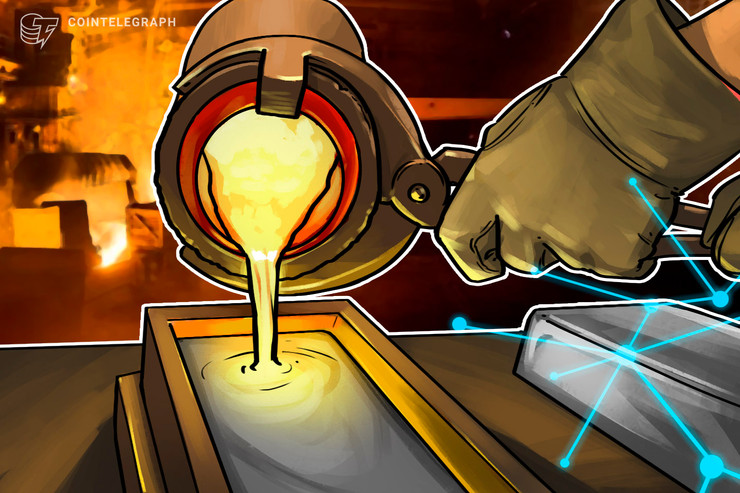 Canadian authorities have approved funding of two blockchain firms, Peer Ledger and Mavennet, to create a platform that enables steel traceability, reported Ledger Insights on March 9. The Innovation, Science, and Financial Development Canada (ISED), a government initiative in charge of promoting the research and development of Canadian small and medium-sized enterprises, adopted the measure, granting both companies CAD $150,000. Strengthening digital traceability on the steel supply chainPeer Ledger (Halifax-based) and Mavennet (Toronto-based) will be working on a proof-of-concept (PoC) prototype for digital traceability of the entire steel supply chain process by using blockchain technology and artificial intelligence. According to Statista, Canada produced more than 13.4 million metric tons of steel in 2018 alone. The proposed blockchain platform, according to the ISED, would be in charge of controlling and sharing in real-time the information of the chain availability within the national metal industry. According to a study conducted by ISED in 2018, the creation of a mechanism that allows steel traceability can cover the need for the industry to produce in a sustainable and environmentally friendly way. An opportunity for blockchain technology in the steel industryThe Canadian government entity detailed their opinions in a study regarding the application of the blockchain in the field:
Peer Ledger is known for developing a blockchain-based MIMOSI SaaS platform for responsible sourcing, generally focused on tracking metal production, including gold. In the case of Mavennet, this announcement came that the U.S. Department of Homeland Security (DHS) awarded $182,700 to integrate a blockchain system into cross-border oil imports between the U.S. and Canada. Cointelegraph reached out to Mavennet and Peer Ledger for additional details but received no response as of press time. This article will be updated accordingly should a response come in.  |
| China’s Central Bank to Inject $4.7M into Blockchain Trade Platform - Cointelegraph Posted: 09 Mar 2020 01:42 AM PDT  The People's Bank of China (PBoC) has secured $4.7 million in funding from China's central government for its blockchain trade finance platform. The funding will be administered over three years and has been designated for research and development projects. The blockchain platform was initially revealed by the PBoC in Shenzhen during September 2018. The platform is intended to facilitate transfers and create an untamperable ledger for secure information sharing between businesses and government departments. Blockchain drives efficiency savings for Chinese corporate financingBy mid-January, it was estimated that the platform had processed $12.4 billion worth of transactions for the 38 banks and nearly 1,900 firms that have signed up to use the platform. Chinese media outlet Xinhua claims that the platform has shortened the time taken to process trade financing from roughly 10 days to just 20 minutes. The costs incurred through corporate financing executed using that platform has also reportedly decreased by approximately 6%. The platform is administered by the PBoC's Digital Currency Research Lab, the Chinese Academy of Sciences, leading Chinese universities and major local banks. Blockchain solutions proliferate in ChinaBlockchain technology has been deployed for an increasing number of applications across Chinese society in recent months. On March 2, Beijing launched a blockchain-based electronic invoicing system for parking. Beijing's taxation authority indicated it will progressively roll-out blockchain invoicing across all car parks in the city to promote paperless invoicing, adding that it plans to implement blockchain invoicing across more sectors in the future. During the first half of February, Xinhua estimated that at least 20 blockchain applications were launched to assist in the Chinese government's efforts to contain the coronavirus — including managing and tracking health records, medical supplies, and relief efforts.  |
| Asset Ratings Giant Morningstar Takes First Plunge Into Blockchain Securities - CoinDesk - Coindesk Posted: 09 Mar 2020 03:56 AM PDT  Another day, another blockchain first. As part of a $39.7 million investment in FAT Brands, the owner of "fast casual" eatery chain Fatburger, DBRS Morningstar has for the first time rated securities issued on a blockchain. Ethereum, to be precise. As reported by Forbes on Sunday, the Toronto-headquartered ratings firm – which says it rates investment assets from over 2,600 issuers worldwide – actually rated a traditional debt security backed by franchise royalties and upfront fees coming in via Fat Brands companies, which also include Buffalo's and Ponderosa Steakhouse. However, the security was structured to include several Ethereum tokens in the investment process. With help from New York-based structuring consultant Cadence, ERC-20 tokens digitally representing the debt security were issued Friday to all investors' wallets, with transactions logged on the Ethereum blockchain. Quarterly payments will follow in the same way, according to Forbes. Morningstar reportedly said in its rating that using Ethereum would speed up access to data on the securities, as well as boost transparency. For the blockchain side of the investment process, $40 million in $CDG, a stablecoin linked to the U.S. dollar, was held by the trustee, UMB Bank, while FAT Brands held other tokens representing two tranches of the debt security. A smart contract completed the settlement of the trade, passing security tokens to the investors and $CDGs to FAT in transactions visible on blockchain explorers. "It's definitely the first rated securitization with a digital asset element, and we're using it the way it was intended: to provide that level of transparency," Nelson Chu, founder and CEO of Cadence, told Forbes. Cadence has previously issued over 60 blockchain securities on Ethereum, though none were rated. Disclosure Read MoreThe leader in blockchain news, CoinDesk is a media outlet that strives for the highest journalistic standards and abides by a strict set of editorial policies. CoinDesk is an independent operating subsidiary of Digital Currency Group, which invests in cryptocurrencies and blockchain startups.  |
| You are subscribed to email updates from "blockchain" - Google News. To stop receiving these emails, you may unsubscribe now. | Email delivery powered by Google |
| Google, 1600 Amphitheatre Parkway, Mountain View, CA 94043, United States | |


Comments
Post a Comment