"ninjatrader margin" - Google News
[unable to retrieve full-text content] NinjaTrader Review 2026 Investing.com
Why Residency Planning Is Important In The Age Of Blockchain - Forbes |
| Why Residency Planning Is Important In The Age Of Blockchain - Forbes Posted: 31 Jul 2020 10:10 AM PDT  Blockchain technology promises to be a leading feature of life in the future. What countries are the ... [+] gettyLike it or not, the blockchain is becoming an ever more important part of our lives. Countries are investing heavily in this new technology which could have the promise of becoming as important to our every day world as 5G networks will be in communications. At its core, blockchain is a computer-based, software-like system called cryptology that networks individuals creating a permanent indelible record of their interactions, like a ledger in accounting records debits and credits. A good visual image is a spiderweb connecting parties to transactions. Blockchain is simply a public database of transactions, distributed across thousands of computers around the world. Each computer that hosts the entire blockchain network is called a "full node." The blockchain operates without a central controller, and decisions are made by the consensus of all the participants - transaction by transaction. Cryptocurrency is a new form of digital asset designed to work as a medium of exchange, based on the blockchain network that is distributed across a large number of computers. This decentralized structure allows the digital asset to exist outside the control of governments and central authorities. The first cryptocurrency was Bitcoin (BTC) and its primary value proposition as a global money was that it is immutable, censorship-resistant, permission-less, accessible to everyone, and controlled by nobody. Digital Assets and their Treatment by Countries Despite the fact that Bitcoin first appeared back in January 2009 and many more cryptocurrencies appeared after, a majority of countries still do not have relevant laws regulating the use of digital assets. Some countries, such as India and China, banned the use of crypto assets or the operation of crypto exchanges. Most other countries, such as the U.S., Canada, the U.K and others, simply decided to treat such assets de facto the same way as they treat stocks and securities when it comes to taxation. Despite this rather cautious position of the majority of the national governments towards crypto currencies and blockchain communities, there are still some countries where individuals who hold, buy or sell these digital assets are not taxed. In these countries blockchain adoption has been more favorably welcomed. Let's take a look at how these countries are treating cryptocurrencies and why they may be the most suitable as places to work and live for traders and investors.  Porto, Portugal old town skyline from across the Douro River. gettyRecommended For You Portugal - Crypto Asset Friendly In Portugal, personal trading in cryptocurrencies is exempt from both a value added tax (VAT), capital gains, and income taxes. Such tax exemptions, however, apply only to private activity with digital assets by individuals. If cryptocurrencies are part of business activity, such as operating a crypto exchange, a crypto hedge fund or running a blockchain start up etc., the usual rates of taxation apply which amount to 21 percent on income. Under the Portuguese Residency by Investment Program, to qualify to temporarily live in Portugal and enjoy favored tax treatment of digital activity, an applicant must purchase real estate of a value of 500,00 Euros, or just 350,000 Euros in urban regeneration areas. Investing in low population density areas lessens the above qualifying requirements by 20 percent. Malta appears to be the only country identified here that will accept Bitcoin for investment purposes. With an investment as outlined above, processing is completed in a matter of a few months. Permanent residence or citizenship is available after five years. Due to tax treatment, the speed of residence and the nature of the investment required, and especially because the country has one of the highest qualities of life in the world, Portugal is a leader in our review of blockchain friendly countries. Germany - A Country Open to Crypto Asset Traders and Investors Germany has a similar approach to Portugal regarding cryptocurrency investors and crypto related businesses. Bitcoin and other crypto assets are not considered fiat currencies, securities or commodities, but rather a means of private payment and are therefore exempt from a VAT. According to the German Income Tax Act, crypto currency investors are not taxed for holding their tokens for a year or less and trading them privately, as long as the total profit from private sale transactions is less than 600 Euros in a calendar year. Anything beyond that amount is taxed. If investors hold their virtual assets for longer than a year, they do not pay taxes on capital gains. However, crypto currency related businesses have to pay corporate income taxes which amount to 15 percent. While Germany does not have a residence by investment program, nonetheless, if an investor is prepared to invest 350,000 Euros over five years in the form of a purchase of a property for 250,000 Euros and an additional investment of 100,000 Euros paid into a development fund for five years, that investor can thereby obtain German legal temporary residence. Processing is a matter of months. If the investor learns German sufficiently, then as early as the 21 month mark, the investor and family members can also become permanent residents. Eventually, they may qualify for citizenship as early as seven years following their arrival in Germany, provided certain requirements related to language and integration are met. Apart from its friendliness to the blockchain world and doing business, Germany is the powerhouse of Europe and provides a high standard of life for those who come to live there and thus scores high in this area.  Marsaxlokk Fishing Village, Malta gettyMalta - A Blockchain Friendly Country Malta has adopted the most friendly approach to blockchain and crypto assets when they are held in the long term. While day traders are subject to business income tax at 35 percent, if an individual holds or makes single transfers of tokens and these transfers are not part of day trading or other coin exchange businesses, no tax has to be paid. The Maltese citizenship or residence by investment program is in the midst of a change at this moment, but in essence involves an investment of over one million Euros. Processing for residence is a matter of a few months. Citizenship is available in one year. Malta is reputed to be the gold standard of the investment migration community and for these reasons is included in this review. In addition to being crypto friendly, each of the three countries mentioned are members of the European Union and thus the holders of Portuguese, German or Maltese passports have full freedom of movement within the whole European Union which includes 28 European countries and the European Economic Area that consists of four extra countries. These three countries are not the only countries interested in promoting blockchain development in their jurisdictions. Cyprus is another country with a citizenship by investment program that can very well also be added to the list above mentioned. It has been active in advancing regulatory supervision of this area inside the EU and may compare with the others identified. There may be others. While this article does not purport to give authoritative tax advice nor has it detailed all the immigration requirements for the jurisdictions mentioned, it provides investors and traders some guidance to consider in discussing a possible move to any of the countries mentioned with expert tax and immigration advisors. Two additional considerations should be kept in mind. Firstly, investors must provide a clear explanation of their source of funds to gain residence or citizenship. Secondly, in the case of Americans, to free themselves of taxation by America were they to move to any of these countries, Americans would need to renounce their citizenship since that country taxes worldwide income based on citizenship.  |
| Regulatory Uncertainty Greatest Problem For Blockchain Entrepreneurs, Says Producer - Forbes Posted: 31 Jul 2020 06:00 AM PDT 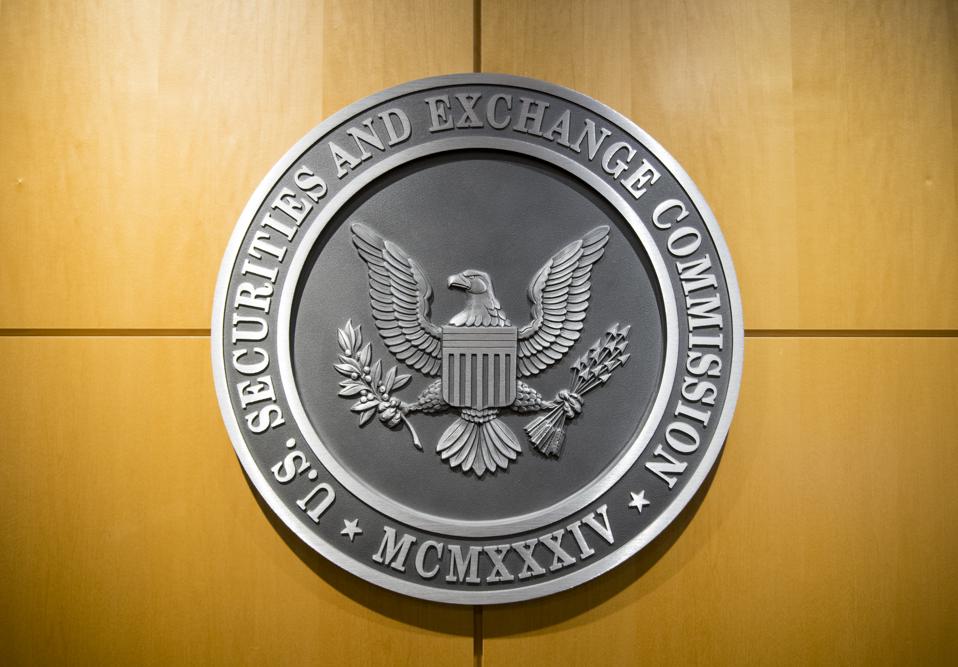 Government intervention is stifling blockchain innovation, according to producer J.D. Seraphine. ... [+] CQ-Roll Call, Inc via Getty ImagesA regulatory environment characterized by widespread uncertainty is the single biggest challenge facing entrepreneurs in the digital currency and blockchain industry, according to J.D. Seraphine, who produced the docuseries "Open Source Money." The show, which started airing July 4 on Discovery Science, follows the challenges of Joe Roets, the architect, founder, and CEO of Dragonchain, as well as other members of his team, as they deal with a U.S. Securities and Exchange Commission (SEC) investigation. While this program, composed of five episodes, is still running, Seraphine took the time to provide an exclusive interview, where he shed some light on his views of government regulation. Charles Bovaird: Correct me if I am wrong, but one major message of your new show, Open Source Money, is that the current regulatory environment is stifling innovation in the digital currency and blockchain sector. Recommended For You J.D. Seraphine: That is correct, I came into the space to explore the potential of utilizing the technology in the media sector. Once I got deeper into the industry, I saw the massive potential for blockchain technology to transform the world. As a producer and entrepreneur, I had a front row seat to watch the impact in the U.S. that negative statements from government officials and media along with regulatory uncertainty had on entrepreneurs, the market and the overall industry. Bovaird: Just so I can get a better sense of your views, do you subscribe to the assertion that government intervention stifles the free market? In this instance, I am not referring specifically to digital currencies and/or blockchain, but instead to the entire free market. Seraphine: I think by and large, free markets are best served by a light touch approach from government. There is a need for a certain amount of action to enforce laws and punish bad actors, but I believe, overall, government is meant to serve the people not the other way around, so any actions it takes should be in the best interest of its citizens. Bovaird: How would you describe the U.S. government's regulatory approach to digital currencies and blockchain? Do you think their approach is too aggressive? Do you think this particular space should not be regulated at all? Seraphine: The U.S. government has had an overall uneven approach to regulating digital currencies and blockchain. It is a fairly new and complex technology so part of that is attributed to a learning curve for regulators and government officials. There are also multiple agencies who have claimed jurisdiction over the regulation of digital assets each classifying them differently, making it very difficult for companies to know how to operate in this industry in the U.S. The industry needs clear regulations and rules or for the government to step back completely like they did with the early days of the internet. I believe this gray area of uncertainty is the worst thing for entrepreneurs and companies attempting to operate here, and it has led to other countries moving ahead of the U.S. in pioneering what many are calling the most important technology since the creation of the internet. Bovaird: Do you think that the regulatory approach the U.S. government is taking with this space could prove beneficial to industry? For example, do you think that a more mature legal framework could help encourage more people to get involved in the space? Seraphine: I think going forward the U.S. can still reestablish itself amongst the leaders of innovation in the fields of blockchain technology and cryptocurrency, but that window is closing fast. A more mature regulatory environment will benefit entrepreneurs and companies in the space and also provide the kind of certainty major players will require before providing investment and infrastructure to support further development in the U.S. Bovaird: Do you think skeptical investors might be more likely to take part in the digital currency and/or blockchain space if regulators could provide a regulatory framework that is both clearer and more mature? Seraphine: Definitely, a clearer and more mature regulatory environment will draw in investors that are currently on the fence about building in the U.S. We are losing mindshare in the global blockchain marketplace, so the opportunity for the U.S. to re-establish itself as a leader of innovation in blockchain is now, or we will be entirely left behind in this industry and it will be costly. The conversation has been edited and condensed for clarity.  |
| William Shatner Makes History on the WAX Blockchain! - GlobeNewswire Posted: 31 Jul 2020 06:35 AM PDT GRAND CAYMAN, Cayman Islands, July 31, 2020 (GLOBE NEWSWIRE) -- via NetworkWire -- For the first time ever, a trove of actor William Shatner's most personal memorabilia is available to the public in digital form on the Worldwide Asset eXchange™ (WAX) Blockchain. Demand when the primary sale commenced on July 30 was so high that the initial 10,000 packs filled with approximately 125,000 digital photographs sold out in just nine minutes. Sales and trades on secondary markets are now booming as collectors are buying, selling and trading photographs from the iconic actor's personal life and career. William Shatner is one of film and television's most beloved stars, with a career spanning more than 60 years. The Emmy and Golden Globe award-winning actor has starred in an endless list of roles that includes Captain Kirk in television's most famous science fiction series, "Star Trek," to the title role in "T.J. Hooker," to the iconic Priceline Negotiator in advertisements for Priceline.com. The scenes in the WAX Blockchain series of Shatner's memorabilia include a picture of Shatner at the moment he found out his daughter was born, a candid photo of him hugging fellow "Star Trek" actor Leonard Nimoy, and even an image of Shatner's dental X-rays (the first such collectible image on the blockchain)!There were two types of packs that went on sale on July 30, 2020, at noon EST on shatnercards.io:3,000 Mega Packs containing 30 digital collectibles. These sold out in three minutes.7,000 Standard Packs containing five digital collectibles. These sold out in nine minutes."I'm astonished at how quickly it all happened – nine minutes! My goodness! My hope is that by trading the shard pieces on the various sites that people may find friends they would have never met otherwise," Shatner said. "The cards themselves represent a beautiful past. The verification of being on the blockchains represents a great future. So we have the past and the future mixing together."This is the third such record-breaking NFT sale on WAX since May 2020.William Shatner Digital Trading Cards on the WAX Blockchain:William Shatner has been a vocal fan of blockchain-based products for years on social media. "There is a saying that putting something online is forever. I disagree. Putting something on a blockchain is forever," he said. The blockchain records every aspect of every collectible transaction and stores it forever. These blockchain records can't be changed by anyone and can be seen by everyone. Therefore, the blockchain is proof that the collectibles are authentic, and they can be traded or sold at any time without ever taking a chance with a buyer or seller because it's verifiable on the WAX Blockchain. The series of Shatner's digital trading cards is made up of a type of blockchain-based collectible, called NFTs (or non-fungible tokens). Every NFT is one-of-a-kind and features unique characteristics that differentiate it from any other NFT, and it can never be counterfeited or duplicated. Collectors purchase packs, which they then open to reveal the collectibles inside which are cards and/or shards. When you combine the three matching shards for any given card, the full card and its rarity are revealed. Owners of the William Shatner NFTs can:Sell them on a marketplace.Trade them instantly, with anyone, anywhere in the world – for free.Trade with confidence that every collectible is certified authentic, unique, and can never be altered.View a collectible's full ownership records and trading history.Showcase their inventory on social media.Search wishlists of other traders.Some of the William Shatner NFT trading cards can be combined to create new and more rare collectibles, and others can be redeemed for physical merchandise personally autographed by Shatner himself. Data for William Shatner cards on the WAX Blockchain includes:Detailed specifications for each card and shard, including the date it was created, its rarity, images of the card, proof of its authenticity and more. With this information, collectors know exactly which cards and shards they are trading – no guesswork, no need to trust or verify other traders.Comprehensive ownership records that show who traded the item and when. Since everyone can see its full ownership history, no one can ever fake ownership.Complete trade history.William Shatner Digital Cards Sale Details:The collection includes:10,000 digital packs.Expected 124,935 shards.A total combined possibility of 41,709 individual trading cards. 25 cards that can be redeemed for an autographed headshot.One card that can be redeemed for an autographed Captain Kirk action figure. "I love this release," says Evan Vandenberg, director of business development for WAX. "It's so unique, not only from the perspective of William Shatner's personal memorabilia being put on a blockchain, but the shard concept and the ability to craft cards is a simple yet awesome mechanic that should really take NFTs to another level."What Are Collectors Doing with Them? Once the packs were released, a buying and trading frenzy commenced. Collectors can still buy and trade or chase after their missing pieces to create full cards on secondary markets. Collectors are buying and selling the collectibles on secondary marketplaces, including: Shatner.MarketWax.simplemarket.ioCollectables.ioThis launch is one of a series of NFT sales that WAX has planned for 2020. The most recent NFT sale sold out in 67 minutes, with the prior NFT sale selling out in 28 hours. Read more about The Worldwide Asset eXchange™ Blockchain and Shatner Trading Cards on the WAX blog here.About WAX: WAX is the safest and most convenient way to create, buy, sell and trade virtual items – to anyone, anywhere in the world.About William Shatner: William Shatner has cultivated a career spanning over 60 years as an award-winning actor, director, producer, writer, recording artist and horseman. He is one of Hollywood's most recognizable figures and a major philanthropist. Additional information can be found at the official William Shatner website via the following link: https://williamshatner.com/ws/. Jassy Jackson marketing@wax.io (800) 203-2049Wire Service Contact NetworkWire (NW) New York, New York www.NetworkWire.com 212.418.1217 Office Editor@NetworkWire.comAttachmentWilliam Shatner Digital Trading Cards on the WAX Blockchain  |
| Blockchain Is Part of Australia’s Cyber Security Solution, Say Experts - Cointelegraph Posted: 31 Jul 2020 12:07 AM PDT  A cyber security and blockchain forum with leading Australian experts and government officials has identified blockchain technology as a direct response to an increase in cyber attacks targeting the integrity of systems through manipulating data. Recently appointed Blockchain Australia CEO Steve Vallas held a panel discussion on July 30 regarding blockchain's use-case in cyber security with experts from various fields being part of the 300+ attendees. The panel consisted of National Blockchain Lead Chloe White from the Department of Industry and Liberal Senator Andrew Bragg, CEO of cyber security firm CyberCX John Paitaridis, and founder and CTO of blockchain database firm ProvenDB Guy Harrison. The experts, with decades of experience in the cyber security sector, defined the emerging technology as a critical component in protecting Australia from future attacks. They further outlined that blockchain, although not a complete solution, should be considered by businesses across the board as the country works to keep ahead of would-be attackers. Blockchain is about data integrityDuring the panel, Paitaridis explained that attacks are increasing in frequency and severity, suggesting China was behind the major state actor attacks from June that threatened many industries including the Australian government: "In June this year, the Australian Prime Minister announced an 'unnamed state actor', you can read into that — China — as being targeting businesses and government agencies across Australia as part of a large, dedicated, persistent scale attack." These cybersecurity breaches have increased by almost 80% in the last 12 months with a specific adjustment in their focus, he elaborated:
This will cause mayhem, Paitaridis explains, as "senior government officials, corporate executives and investors can be imparied if they can't trust the information they are seeing". It's not all bad news, as this vulnerability can be addressed through blockchain, Paitaridis concluded. It isn't about keeping people out, but rather in maintaining the integrity of the data Harrison explained, "the implications of people tampering with data are huge [...] and that's where blockchain comes in."
In response to a question around live data manipulation — that is, manipulation of data prior to being injected onto the blockchain — Harrison suggested that blockchain will need to be used in conjunction with other solutions such as artificial intelligence. "Most blockchain's do not have many of the other features that we need to use data effectively," he concluded, stating that, although an essential part, they are not the only technology required in a proper cyber security solution.  |
| You are subscribed to email updates from "blockchain" - Google News. To stop receiving these emails, you may unsubscribe now. | Email delivery powered by Google |
| Google, 1600 Amphitheatre Parkway, Mountain View, CA 94043, United States | |

Comments
Post a Comment