"ninjatrader margin" - Google News
[unable to retrieve full-text content] NinjaTrader Review 2026 Investing.com
Startup leverages cryptocurrency to push plastics... - Plastics Recycling Update |
| Startup leverages cryptocurrency to push plastics... - Plastics Recycling Update Posted: 05 Aug 2020 12:00 AM PDT 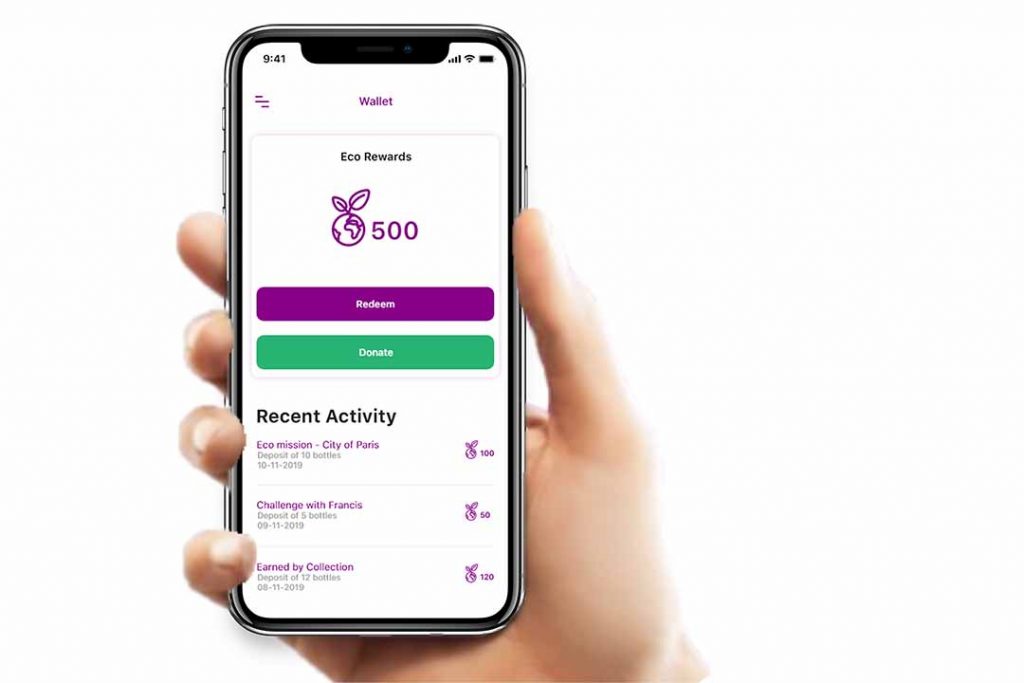 Users of the ZeLoop app will receive cryptocurrency for bringing materials to recycling collection sites. | Courtesy of ZeLoop. A mobile app in beta testing seeks to reward users for properly recycling materials at drop-off locations. The company says an exchange of currency is vital to the process. Dubai-headquartered ZeLoop has developed an app that informs users of recycling options and rewards them for bringing recyclables to those sites. The app is beginning with a focus on plastic bottles and plans to roll out its platform to cover more materials in the future. Beyond the app, ZeLoop has developed a cryptocurrency system to support the rewards program. Users will receive cryptocurrency for bringing materials to recycling collection sites, and ZeLoop aims to bring in large consumer-facing businesses that will allow consumers to use the currency for various goods or services. Alberto Saavedra, U.S. manager for ZeLoop, said the concept is built off the idea of supporting a circular economy. But he takes that concept further than the common buzzword – he looks at it in economic terms. "You cannot have an economy without some sort of circulation of currency," he said. "We believe in capitalism, if you wish," Saavedra added. "We don't believe that we should order people to recycle. We should compensate them for recycling." The app developer wants to work with packaging firms, recycling companies, retailers and other industry stakeholders. How the app worksZeLoop has several core functions, beginning with informing users where to recycle. Users can access a map detailing nearby recycling locations, and they can also edit that map and contribute to the location database, a service that will also reward them with the cryptocurrency points. Under the app rewards platform, a user would take a load of plastic bottles to a drop-off recycling site and use the app to take a photo while dropping the recyclables off. ZeLoop then has a way of validating that it is a legitimate recycling claim, using a proprietary feature of the software, Saavedra said. Then, the user will receive compensation through a cryptocurrency similar to Bitcoin. Cryptocurrency draws its value from its limited quantity, Saavedra explained, as well as the fact that the currency does not degrade and cannot be modified or falsified. ZeLoop's cryptocurrency system comes in the form of "eco-rewards." Under this system, a limited number of eco-rewards will be created and awarded to ZeLoop users when they recycle materials. That currency will then be redeemable at various partnering stores or other businesses, under the ZeLoop plan. "Organizations will be able to participate in this cryptocurrency exchange to start monetizing the eco-rewards," Saavedra said. Depending on what a partnering company chooses, eco-rewards could be redeemable for services or products, or could even be exchanged for cash. The app also brings game-like concepts into its platform. This portion of the app is called "eco-missions," and under this system, a recycling organization could create certain "missions" for a user to undertake and receive bonus rewards points. For example, a recycling location could provide higher rewards compensation for bringing a certain quantity of bottles to a specific drop-off site on a specific day. These "missions" would be created by sponsoring partners. Current status and next stepsZeLoop is starting out with a focus on plastic bottles and drop-off sites, but the platform plans to expand that focus to curbside recycling in the future, Saavedra said. For now, the app is in beta testing and available for users to try it out. ZeLoop is hoping for a wider commercial launch later this year, although Saavedra noted with the pandemic disruptions this year, that date may be pushed out. The commercial launch will begin in Dubai, where company CEO Eric Schaffner is based, and Uruguay, where Saavedra is from, and will roll out to a wider user base from there. "A month after we launch in Dubai and Uruguay, we'll be ready to launch everywhere else," Saavedra said. ZeLoop will generate revenue by advertising, offering a premium version of the app, and taking a commission from the sponsorships with partnering companies, Saavedra said. The company detailed its future plans in a white paper published on its website. More stories about collection   |
| The impact of cryptocurrency on the traditional sports industry - TechTalks Posted: 22 Aug 2020 07:38 AM PDT By Luke Fitzpatrick
 The cryptocurrency industry has spread around the world in only a few short years. Not too long ago, crypto industry leaders' desires for crypto were grand, but even they would not have expected to see such progress so quickly. These days, bitcoin and its altcoins have managed to infiltrate almost every industry. They are far from dominating them all, of course, but there are people in all industries who are now considering the use of crypto and its underlying blockchain technology, even banks, and entire nations. China and its CBDC, the so-called digital yuan, are a prime example of this. But, this would not have been the case if a few, more flexible industries did not make the first step. The sports industry is one of the best examples. The sports industry and digital currencyThe sports industry and crypto industry are maintaining an intimate relationship these days, but this was not always the case. As mentioned, this was one of the more flexible industries that were not too scared to try out something new. Of course, it did not exactly throw itself into crypto, but it did open its doors to an alternative payment method. It all began with gambling companies, and offshore sports betting websites. They started accepting crypto as a payment method. Soon enough, some of the sports club owners started paying their members in crypto, as well. The first known example of this is a professional hockey player, Nikolaj Rosenthal, who currently also acts as the CEO of Evonax, which is one of the few remaining KYC-free exchange platforms. Back when it happened, Rosenthal stated: "It's really exciting to be allowed to pioneer with this. Digital currencies could provide a lot of possibilities, and I appreciate the opportunity to experience them in such a unique way." After a while, when the initial coin offering (ICO) trend kicked off and everyone seemed to have launched their own coin, the idea also spread throughout the sports industry. Fan tokens emergeThe ICO movement may have crashed in the meantime, but the idea of different clubs offering their fans different tokens remained. These days, some of the world's largest sports clubs, such as Juventus and FC Barcelona, have their own tokens, meant to be distributed and used by their fans. The fans can use the tokens for buying merchandise, voting on some upcoming club-related decisions, winning rewards such as VIP seats, and more. Adrian Pollard from exchange provider bitHolla chimes in, "We've seen this attempt start all the way back to Fanship and I believe it is a great way to connect fans with stars in a much more interesting way that we've never thought of before. By mixing a token of value and effectively the worth of the star and having it trade on a marketplace we could be seeing a more direct way for fans to speculate on the worth of a star." However, all of that is only a bonus on what these clubs really wish to achieve, which is building a stronger community while connecting directly with their fans from anywhere in the world. The fans would be able to interact with their favorite clubs, use their cryptocurrency, and participate in group decisions. So, not only is crypto now used for gambling and betting, but it also serves for creating tighter, more directly served communities, and it comes as payment for sports players willing to accept them. These are major advancements for an asset class that nobody took seriously only a few short years ago. And, while the sports industry is among the early adopters, similar acceptance of crypto is beginning to emerge in many other industries, as well. eSports is also rather tight with the cryptocurrency, which leads directly into the gaming industry — another industry that was among the first to open its doors to crypto, and one of its biggest adopters thus far. "I don't think it will be long before we start seeing more stars self-tokenizing themselves. We are seeing early examples of this today even with ordinary people experimenting with it. But when it comes to actual sports stars or better yet potential sports stars it's a good way for them to get the funding support they really need by tokenizing their future potential. I think the next natural step we will see is some stars having not only their own coin but their own marketplace to trade their token directly on their website," says Pollard. About the author  |
| You are subscribed to email updates from "bonus bitcoin" - Google News. To stop receiving these emails, you may unsubscribe now. | Email delivery powered by Google |
| Google, 1600 Amphitheatre Parkway, Mountain View, CA 94043, United States | |


Comments
Post a Comment