"ninjatrader margin" - Google News
[unable to retrieve full-text content] NinjaTrader Review 2026 Investing.com
How to compare cryptocurrency exchanges - finder.com.au |
| How to compare cryptocurrency exchanges - finder.com.au Posted: 30 Sep 2020 04:11 AM PDT
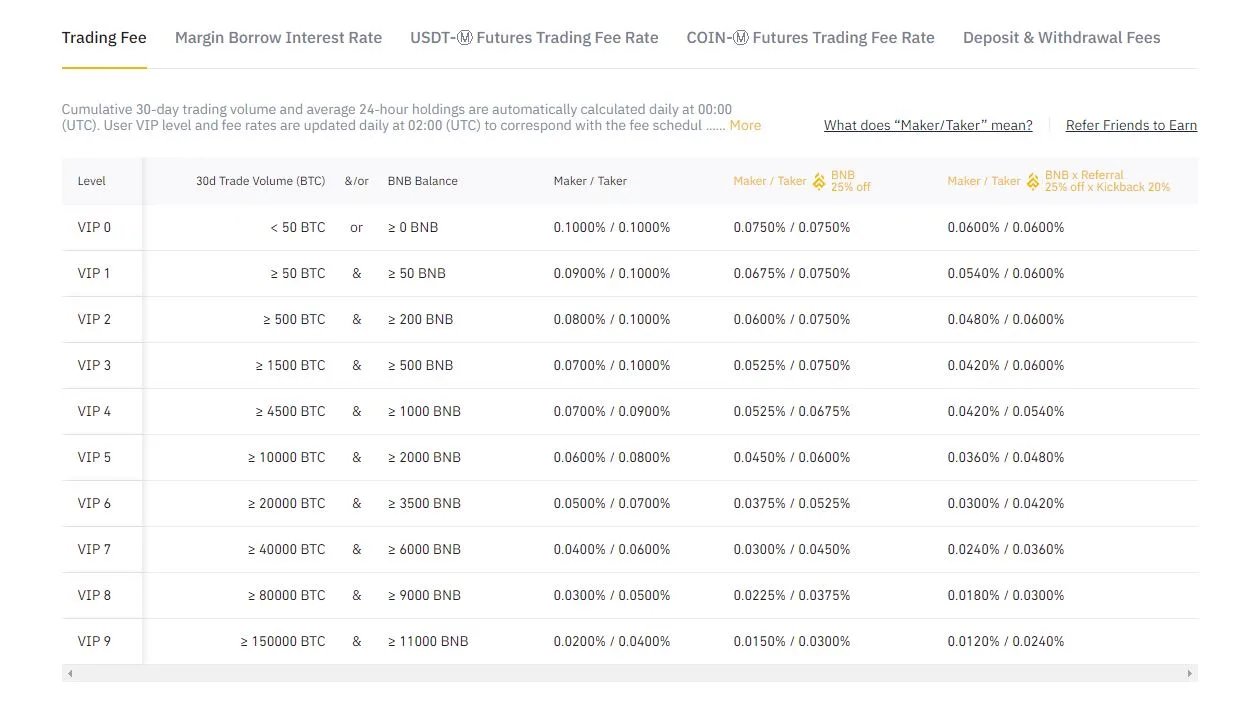
SPONSORED: The best way to compare cryptocurrency exchanges is to know how to do it yourself.It can be tough to choose the best cryptocurrency exchange for your needs when there are so many to choose from. Comparison websites can be very helpful, but it can also be hard to trust them if they aren't clearly and transparently disclosing their commercial interests.  This guide is sponsored by Binance. Join the world's largest cryptocurrency exchange and enjoy zero-fee AUD deposits and withdrawals. Trade with Binance anywhere, any time. Learn more.This guide is sponsored by Binance. Join the world's largest cryptocurrency exchange and enjoy zero-fee AUD deposits and withdrawals. Trade with Binance anywhere, any time. Learn more.   That's why at the end of the day, there's no substitute for doing your own research. This guide will walk you through some of the aspects of cryptocurrency exchanges to consider, and show you how to see for yourself which exchange is right for you. If you want to start comparing exchanges, make a shortlist of the exchanges you're considering, and try following these steps for each of them so you can see for yourself how well they stack up. What's in this guide?Comparing feesIf you're looking to compare value for money, that means going to exchange websites and comparing the fees. A quick way to find the fees page on almost any exchange is to go to the home page, then scroll all the way down to the site index at the bottom of the page. You'll almost always see a "Fees" link in the index. Head to that page, and you'll get a nice overview of the costs.
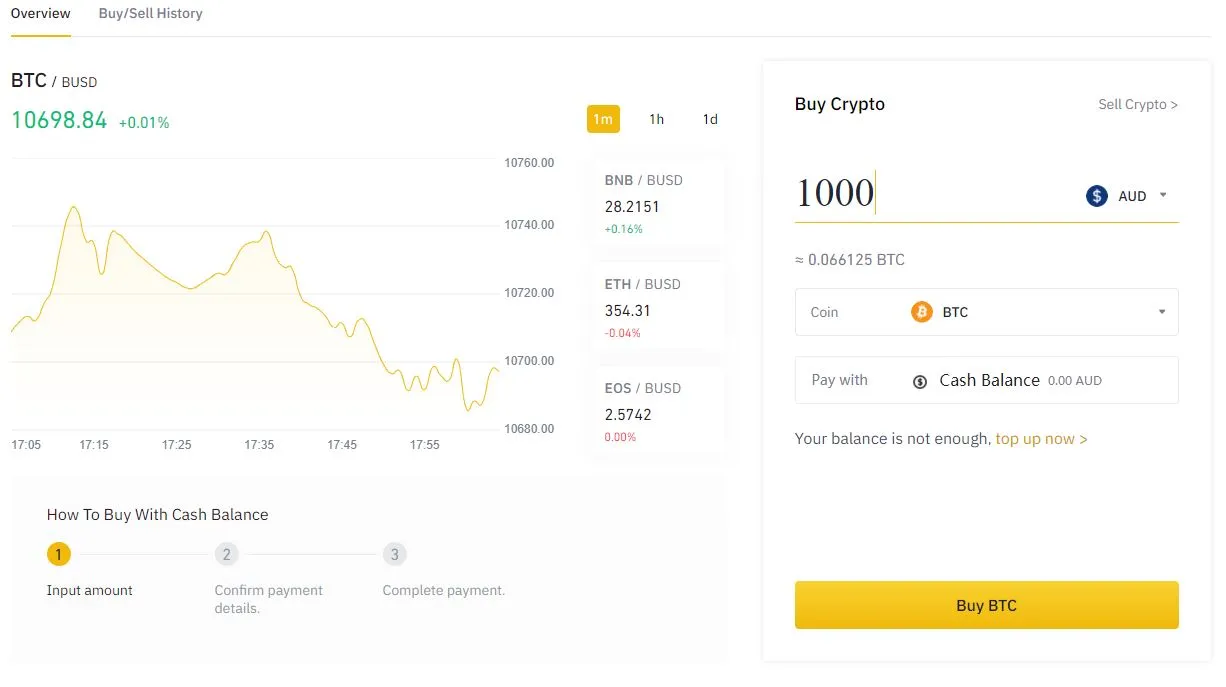
You can safely ignore the fees that won't apply. For example, if you don't plan on doing any margin trading, you won't need to worry about those fees. In this case, we can see that the base fees are 0.1% per trade, with a few conditional discounts to consider. It's also worth paying special attention to the deposit and withdrawal fees. If you can't see them listed with the rest of the fees, you may have to create an account and go through the motions of heading to the deposit screen to see the fees. Fortunately, this isn't usually necessary in practice. As a general rule of thumb, you can make zero-fee AUD deposits and withdrawals on most Australian exchanges with POLipay, PayID and other methods, courtesy of Australia's fine banking infrastructure. This is the case with Binance. It's worth noting, however, that certain payment methods such as cash will invariably cost more. It's also important to remember that the obvious fees are only one part of the cost. For the complete picture, you also need to consider the spreads – the exchange rates, essentially – when buying crypto on different platforms. Comparing ratesThe spread refers to the difference between the current market value of the cryptocurrency and the amount you're paying for it in AUD, like the exchange rate. It will vary over time and depend on the situation. For example, different cryptocurrency purchases, different base currencies, different exchanges and different amounts spent can all affect the outcome. As such, it can be a good idea to check the spread whenever you need to make a purchase, if you're interested in finding the best deal possible. On most exchanges you can find the spread by creating an account and walking through the steps to make a purchase. You will see the cost before confirming the transaction. To do this on Binance, for example, you would:
In this case, we can see that a $1,000 purchase of Bitcoin would net us 0.066125 BTC. To find the spread, we can then compare this to the mid-market prices for Bitcoin at the time, denominated in AUD. For example, if we search for current Bitcoin prices online we find:
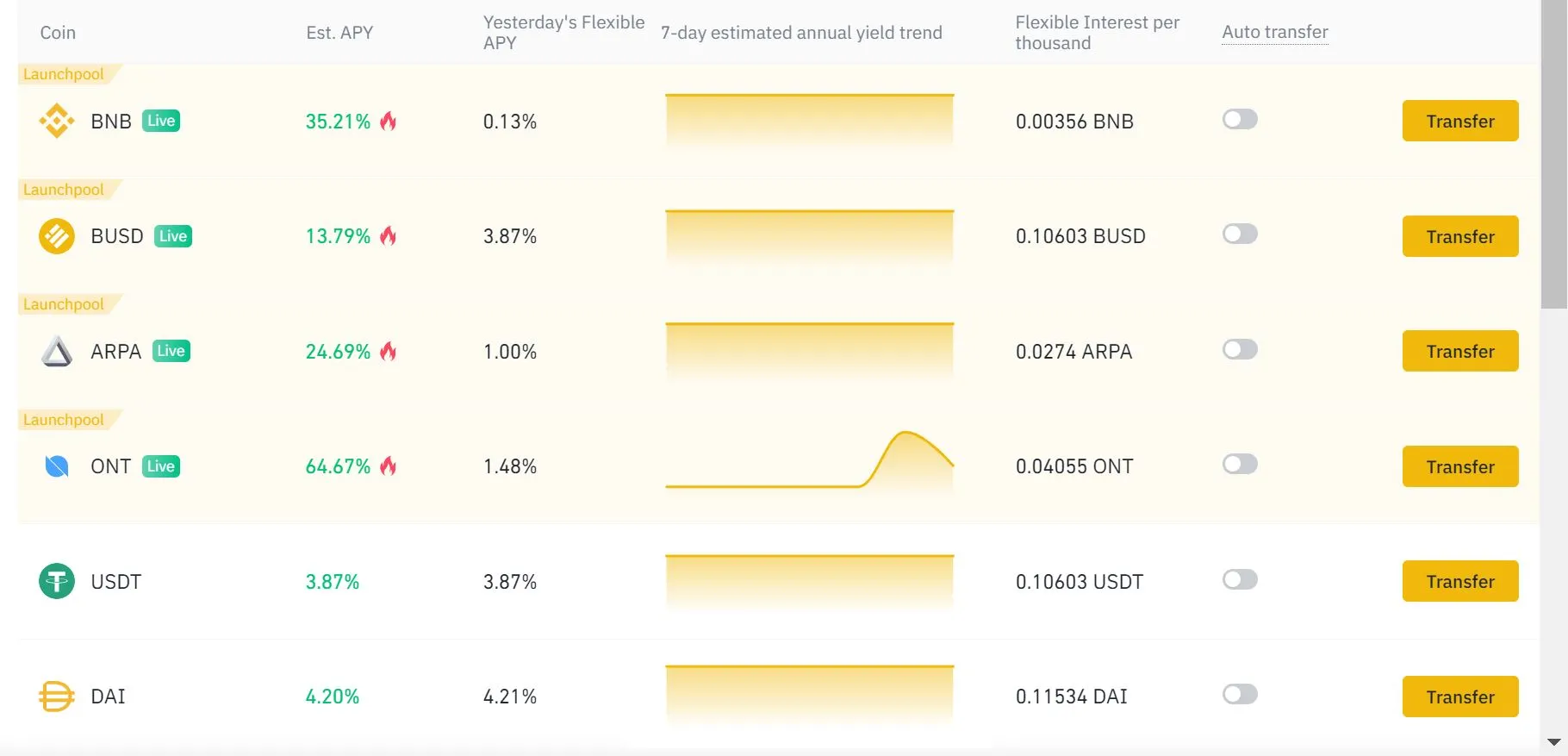
In this example, the difference between the Binance prices (first image) and the mid-market Bitcoin prices (second image) is the spread. To help make it easier to compare the spread across different exchanges we can drop those two numbers - 0.66125 and 0.66469 in this case - into a percentage calculator to see what exactly the difference is. In this case it comes out at just 0.5%. Because the spreads are almost like a "hidden fee" of sorts, and because the cost of these spreads often makes up more than 1% of the total price, it's well worth paying special attention to them and comparing them across different exchanges prior to purchase. Comparing securityThe overarching security hazard is the fact that you're entrusting funds to a cryptocurrency exchange, meaning you could be affected if it gets robbed, goes insolvent, turns out to be fraudulent or if something else goes wrong. On traditional finance trading platforms, customer funds are often insured, held with a registered custodian and segregated from the funds of other customers and the trading platform itself, by mandate. However, in the newer and still evolving cryptocurrency space, these mandates mostly aren't there yet, meaning cryptocurrency exchanges are largely responsible for developing their own security frameworks. Binance, for example, puts 10% of trading fees into its Secure Asset Fund for Users (SAFU) similar to a form of self-insurance. Other exchanges opt for varying grades of third party insurance coverage or forego it entirely. A good at-a-glance test for security is to look for the oldest, largest and most popular exchanges. Platforms with poor security typically don't survive long enough to get old, while larger and more popular exchanges are targeted more frequently, so can be assumed to have better security. Trading volume is a good overall indicator of how big and popular an exchange is. This information can be found in the many exchange data aggregators available, such as CoinMarketCap, Nomics and CoinGecko. It's worth consulting multiple sources to make sure you're getting a clear view. Comparing featuresIt's also worth considering the features available on an exchange, especially if you're looking for more than just basic buying and selling, or if you have something specific in mind. One of the most attractive features appearing on more and more exchanges is the ability to earn returns on your cryptocurrency holdings, so that your assets can go to work instead of just sitting around in an exchange wallet. Binance is one of a handful of exchanges to offer this, but many others are following suit. If this appeals to you, it could be worth looking for that feature in particular.
Other features to keep an eye out for include:
Crypto selectionCryptocurrency selection is one of the easiest things to compare. More supported cryptocurrencies mean more options, and if there's a specific cryptocurrency that you're interested in buying, look for an exchange that supports that coin. Once again, exchange data aggregators can be very helpful for this. It's also worth considering how quickly exchanges list promising-looking coins after they appear. In many cases, there's a lag of weeks or months before exchanges list them, but sometimes it can be as fast as hours or days instead. In the end, the best exchange for you depends on what exactly you're looking for, and best way to find it is to know how to compare exchanges based on the elements that are most important to you. Trade with BinanceAlso watch:Disclosure: The author owns cryptocurrencies including LINK at the time of writing. Disclaimer: This information should not be interpreted as an endorsement of cryptocurrency or any specific provider, service or offering. It is not a recommendation to trade. Cryptocurrencies are speculative, complex and involve significant risks – they are highly volatile and sensitive to secondary activity. Performance is unpredictable and past performance is no guarantee of future performance. Consider your own circumstances, and obtain your own advice, before relying on this information. You should also verify the nature of any product or service (including its legal status and relevant regulatory requirements) and consult the relevant Regulators' websites before making any decision. Finder, or the author, may have holdings in the cryptocurrencies discussed. Picture: Shutterstock Latest cryptocurrency news | |
| How to save money on large cryptocurrency trades - Stockhead Posted: 22 Sep 2020 12:00 AM PDT  Link copied to Cryptocurrency is bought and sold in different ways. Trades are commonly made on public exchanges like BTC Markets. Others are settled 'over-the-counter' (OTC). OTC refers to trading privately between two parties. Trades are made outside of public exchanges. OTC is an effective way to save money on large trades. Here's how it works. What is OTC and how does it differ from exchange trading?OTC trades are negotiated deals made between two private parties. Stocks, currencies, and other assets, like cryptocurrency, can be bought and sold OTC. This differs from exchange trading which occurs in marketplaces hosted by exchanges. For example, the Australian Stock Exchange (ASX) hosts stock markets. Similarly, BTC Markets hosts trades between digital assets, including cryptocurrencies, and Australian dollars. These markets consist of digital order books. Buy and sell orders go 'onto the books' when created. Orders are taken 'off the books' when matched with other trades. OTC contrasts this. There is no order book. Prices are privately negotiated and agreed upon by two parties. One benefit of OTC is fixed rates. This reduces the risk of exposure to price slippage. Slippage refers to prices changing while orders are being placed. This results in entering or exiting a trade at an undesired price. Slippage commonly occurs in volatile markets. How does OTC save money on large cryptocurrency trades?OTC trades can result in a lower average purchase price. This is especially beneficial for high-volume trades. Large trades executed on exchanges can have the opposite outcome. This has to do with order books. Say an individual, Mary, wants to buy 5 Bitcoin at market value. Bitcoin is trading at AU$15,000 per coin. She looks to buy on an exchange. The order book shows 1 Bitcoin is available at AU$15,000 – not enough to fulfil Mary's 5 Bitcoin trade. However, more volume is available. Other sell orders sit at higher prices. Mary's trade is settled by taking from these orders. She now owns 5 Bitcoin but has paid more than intended. What if Mary made the same trade OTC? She engages with a dealer to buy 5 Bitcoin. Both parties agree on a deal. Mary buys 5 Bitcoin at $15,000 per coin. The fixed rate results in cost savings on her purchase. Who supports OTC trade for cryptocurrency?BTC Markets is Australia's largest digital asset and cryptocurrency exchange. Their OTC desk is for discrete, high-volume trades. BTC Markets facilitate your deal directly. You gain access to their global network of liquidity providers. Personalised service is provided for orders worth AU$100,000 or more. The OTC service is open to individuals, institutions, and Self Managed Super Fund (SMSF) clients. Contact BTC Markets to find out more information about OTC. BTC Markets is Australia's leading digital asset exchange, trusted by 270,000 verified clients who have traded over $10.5 billion. Buy, sell and trade Litecoin (LTC), Bitcoin (BTC), Ethereum (ETH), XRP and more with AUD today. Visit BTC Markets for more information. This article was developed in collaboration with BTC Markets, a Stockhead advertiser at the time of publishing. This story does not constitute financial product advice. You should consider obtaining independent advice before making any financial decisions. Link copied to  | |
| Will we see more Australian businesses transact with cryptocurrency? - DynamicBusiness Posted: 29 Sep 2020 11:06 PM PDT
Cryptocurrencies have had a rocky road towards mainstream acceptance. In 2017, the CEO of JP Morgan, Jamie Dimon, called bitcoin "a fraud". However in 2019, JP Morgan became the first US bank to successfully test its own digital coin. The growth of digital currency has enthralled investors. Bitcoin, the world's largest cryptocurrency by market cap, saw prices surge as high as USD$19,000 per bitcoin in December 2017 before dropping to around USD$7,000 in the following months. It is currently trading at over USD$10,000. There is also considerable scepticism surrounding cryptocurrency among some governments and financial firms. For instance, on Tuesday a survey by the Royal United Services Institute think-tank and the Association of Anti-Money Laundering Specialists found that the illicit use of cryptocurrencies is a chief worry. This month, Kraken – a San Francisco-based cryptocurrency exchange – became the world's first cryptocurrency bank after securing a US bank charter that allows American investors to bank between digital assets and national currencies like USD. Recognised under federal and state law, Kraken will be the first regulated US bank to provide comprehensive deposit-taking, custody and fiduciary services for digital assets. We chatted to Kraken's managing director in Australia Jonathon Miller, about the regulatory road to becoming a bank and the trends they have observed in the use of cryptocurrency by businesses today. What is cryptocurrency? Investopedia defines cryptocurrency as "a digital or virtual currency that is secured by cryptography, which makes it nearly impossible to counterfeit or double-spend." Cryptocurrency is decentralised, which means that there is no central monitoring oversight and its safety is instead ensured by algorithm-based trust. The first cryptocurrency was Bitcoin, launched in 2009, and since then thousands of alternative cryptocurrencies have been introduced. Jonathon Miller, Kraken's Managing Director in Australia, is bullish about its future significance. "The future of finance is a multifaceted world of digital assets," said Mr Miller. Are Australian businesses using cryptocurrency transactions? In 2018, Brisbane Airport became the first in the world to accept cryptocurrency payments, enabling travellers to make purchases with digital currencies such as Bitcoin, Litecoin and Ethereum at more than 30 retail and dining outlets located throughout the international and domestic terminals. There is still a steep learning curve among Australian businesses when it comes to using and transacting with cryptocurrency. Nevertheless there has been growing interest amongst businesses in the fund management space in Australia. "Financial institutions are more interested in cryptocurrency. Some more regulated industries, like superannuation funds, are more reticent," said Mr Miller. Moreover, there appears to be growing interest from new and tech-savvy investors. "There are a huge amount of new entrants in the crypto space. People have found extra time during the pandemic," said Mr Miller. "People aren't looking to spend more. It's because people have extra time and are looking for alternate revenue streams. "Millennials and sophisticated investors are very interested in crypto as an asset class." How has cryptocurrency affected corporate activity? In August this year, MicroStrategy – a Virginia-based business intelligence software company – purchased $250 mn in bitcoin assets. "Our investment in Bitcoin is part of our new capital allocation strategy, which seeks to maximise long-term value for our shareholders," said Michael J. Saylor, CEO of MicroStrategy Incorporated, in a statement. "This investment reflects our belief that Bitcoin, as the world's most widely-adopted cryptocurrency, is a dependable store of value and an attractive investment asset with more long-term appreciation potential than holding cash." Mr Saylor also lauded investments in cryptocurrency as a hedge against inflation, as the limited number of bitcoins available make it akin to a "digital gold". However there are persisting regulatory issues that stymie the uptake of cryptocurrency among businesses, such as how issued tokens from initial coin offerings (ICOs) are treated. While Australia's regulator ASIC formally recognises crypto assets and issuers, there has been a regulatory divide internationally that has slowed mainstream adoption. The different regulatory approaches taken across the world – from outright bans in China and South Korea to regulation by analogy in the US – mean that innovation and cryptocurrency activity can be difficult. But the Wyoming Banking Charter given to Kraken in the US might indicate a turning of the tide. "I think what we'll see is a use of blockchain to facilitate all types of financial activity including fundraising. Maybe a digital security rather than an ICO. "The idea of issuing an instrument that a user has control over an entity is an age old method. The frameworks will harmonise and we'll see cryptocurrency in financial markets." What are the main barriers for cryptocurrency usage in Australia? Whilst Australian ATO and AUSTRAC guidance on business cryptocurrency transactions is quite clear, slow global harmonisation of fintech regulation creates a blockade for the use of cryptocurrency in business transactions. "Cryptocurrency is inherently global – and it forces regulators to think more globally. Fundamentally, international harmonisation around crypto regulations is one of the big things that could happen … I think it's possible." When personal cryptocurrency is disposed of in Australia, it may be treated as a capital gains tax event. However profits from disposal as part of a business will be assessable as ordinary income and not as a capital gain. Lisa Askenazy Felix, head of global tax at Kraken, highlighted that there are some key areas in Australian tax law that could be reformed. "Digital assets also serve a growing need in today's era of the remote workforce as a means to compensate employees. Yet the ATO's 2014 ruling on the treatment of payment (even partial payment) in crypto makes this cost prohibitive for companies to do so." Felix also argues against the treatment of cryptocurrency as a fringe benefit where an employee receives cryptocurrency as remuneration instead of AUD as part of a valid salary sacrifice arrangement. "It would benefit employment globally if the ATO would reconsider payment in Bitcoin to be treated as wages or salary. This would be provided the company withholds and remits taxes, just as it would with other forms of monetary wages, rather than imposing the more onerous FTB regime." This does not constitute financial advice. If your business is interested in cryptocurrency, you should consider seeking independent legal, financial and tax advice. Dynamic Business is not liable for any loss caused, negligence or otherwise, from reliance on the information provided in this article. Keep up to date with our stories on LinkedIn, Twitter, Facebook and Instagram.  |
| You are subscribed to email updates from "bitcoin aud exchange" - Google News. To stop receiving these emails, you may unsubscribe now. | Email delivery powered by Google |
| Google, 1600 Amphitheatre Parkway, Mountain View, CA 94043, United States | |




Comments
Post a Comment