"ninjatrader margin" - Google News
[unable to retrieve full-text content] NinjaTrader Review 2026 Investing.com
Cryptocurrency XRP Is in Free Fall With Exchanges Delisting Coin - Mint |
| Cryptocurrency XRP Is in Free Fall With Exchanges Delisting Coin - Mint Posted: 29 Dec 2020 09:05 PM PST XRP continued its plunge after Coinbase became the latest U.S. crypto exchange to remove the world's fourth-biggest coin in the wake of an SEC lawsuit against Ripple Labs Inc. XRP tumbled 37% Tuesday, bringing its drop to 60% in the week since securities regulators accused Ripple of issuing more than $1 billion in unregistered tokens. Coinbase said Tuesday that it will fully suspend trading XRP on Jan. 19, but will continue providing custodial services for clients. Also Read | Ten books from 2020 you must not miss Customers will find it increasingly difficult to trade XRP after the largest exchange joined Bitstamp in delisting the token. Coinbase customers can move it to another exchange, but it is growing more likely that the regulatory challenge will lead other U.S.-based venues to follow suit. Last week, the Bitwise 10 Crypto Index Fund (ticker BITW) liquidated its position in XRP, which comprised 3.8% of its holdings. "This is obviously bad for XRP across multiple dimensions: fewer potential buyers, and lower overall liquidity. For XRP to work as Ripple intends, XRP needs to be very liquid, so this particularly harmful," said Kyle Samani, co-founder of Multicoin Capital. The Securities and Exchange Commission said in last week's suit that Ripple raised more than $1.4 billion through the sale of XRP without first registering it as a security with the agency, creating "an information vacuum" that mislead investors. San Fransisco-based Ripple has denied the allegations. "The SEC has introduced more uncertainty into the market, actively harming the community they're supposed to protect," Ripple said in a statement on its website. "It's no surprise that some market participants are reacting conservatively as a result. We'll be filing our response in a few weeks to address these unproven allegations."  |
| Cryptocurrency exchange Coinbase to suspend XRP trading - South China Morning Post Posted: 28 Dec 2020 06:36 PM PST [unable to retrieve full-text content]Cryptocurrency exchange Coinbase to suspend XRP trading South China Morning Post  |
| Andrew Keys: 16 Ethereum Predictions From a Crypto Oracle - CoinDesk - CoinDesk Posted: 29 Dec 2020 08:01 AM PST Every year since 2016, I've made predictions about what the next year will bring for the industry. If you pay attention to the incremental change that occurs year after year, you realize everything is connected and you can foresee some exciting outcomes. 2021 will undoubtedly be a year for blockchain and crypto to take center stage economically, politically and socially. Here's what I see coming.
1. In 2020, the world started to understand the intrinsic value of bitcoin as "digital gold." In 2021, we will witness the same understanding of Ethereum as "digital oil." In the next year, Ethereum will solidify its place as the future substrate of the global digital economy by underwriting the world's contracts. Contracts are the connective tissue of the world – sales contracts, college acceptances, employment offers, insurance policies, medical prescriptions, NDAs, ISDA agreements, etc. Yes, Earth runs on contracts (not on Dunkin'). Ethereum allows contracts to go truly digital. The digitization of the contract is the digitization of the global economy, which has been valued at an estimated $270 trillion (compared to the $18 trillion market cap of gold that bitcoin stands to capture). Ethereum has the opportunity to upgrade entire economies, not just one asset class. 2. Ethereum 2.0 phase 1 will successfully occur. On Dec. 1, the Ethereum community successfully launched phase 0 of Ethereum 2.0. The network upgrade from Proof-of-Work to Proof-of-Stake will make Ethereum scale and run faster with less computing power. In 2021, we will see phase 1 of Ethereum 2.0 go live, drastically improving scalability. 3. Bitcoin will reach $50K. Bitcoin has a singular use case with a limited supply. As more institutional investors continue to buy bitcoin, the price will surge to $50,000. 4. Ether will reach $2K. The Eth 2.0 upgrade will catapult the network's capability and garner even more attention from enterprises and institutional investors, driving the price of the ether currency to new heights. 5. Total DeFi locked will exceed $150 billion and 2021 will be the year of DeFi cross-chain bridges. It is undeniable that Ethereum is home to the majority of decentralized finance activity. But other networks will enter the space in a more material way, putting other native tokens to work in Ethereum's DeFi ecosystem. With the various tokenized bitcoin options (tBTC, ren, wBTC) growing in popularity, we will see bitcoin's $430 billion market cap collateralized in DeFi. This will grow the TVL in DeFi exponentially. 6. As Web 3.0 gains traction, the value will accrue in the protocol layers, rather than the application layers. In Web 2.0, the majority of the value lies in the application layer of the stack. The largest internet company on the planet is not the company that maintains the HTTP protocol, it's the company that provides the most valued and entrenched experience to the end user. In Web 3.0, the scope of the application layer will shrink and we will witness protocol infrastructure provide the most value. 7. Layer 2 will explode. In 2021, Ethereum will continue to cement its position as the leading layer 1 blockchain. As with any technology stack, there are many layers that make up an application. With Ethereum as the base layer, we will see an explosion of layer 2 solutions that will augment the Ethereum mainnet with unique features: scalability, privacy, interoperability and more. DeFi has grown on Ethereum at an exponential rate, causing gas fees to skyrocket and transactions to slow. Advancements in layer 2 technologies will provide a scaling solution for all of the microtransactions that do not need to happen on mainnet. So 2021 will be a breakthrough year for projects like ZK-Rollups and Optimism (shout-out to Jinglan Wang) as more dapps turn to layer 2 solutions like state channels to increase transaction throughput up to 100 to 2,000 transactions-per-second (TPS). 8. IPFS and Filecoin will step into the global spotlight. In 2016, IBM said that 90% of the world's data was created in the prior two years alone. That was four years ago, when the world generated 2.5 quintillion bytes of data. Every internet connected device on Earth –smartphones, smart TV's, computers, cars – is generating data. As the amount of data generated grows exponentially year after year, so will the need for storage that is cheap, accessible and permissionless. The options we have for data storage today stand in stark contrast to the needs of tomorrow, and enterprises and consumers alike will begin to understand the limitations of existing solutions. Enter IPFS and Filecoin. IPFS and Filecoin are complementary layer 1 protocols that work in tandem to provide decentralized storage. Since its mainnet launch in October, Filecoin storage has surpassed 1 exbibyte of capacity (that's a colossal amount). Bridges between Ethereum, IFPS and Filecoin are already underway and in 2021 we will see entire workflows – from agreements and transactions to data storage and sharing – executed using decentralized protocols. 9. 'Ethereum killers' will need to find a niche or will be slaughtered. For years, various layer 1 blockchains have marketed themselves as "Ethereum killers." Many have promised a faster and more sophisticated smart contract platform with little to show for it. In 2021, those that have raised millions on the promise of capturing Ethereum's market share will need to carve out a niche use case for their platforms or risk becoming irrelevant before any code has been shipped. Ethereum's dominance is comparable to Google's share of search, and other protocols are contributing to this hegemonic position by building cross-chain bridges as one of their first integrations. These layer 1s will likely gain momentum for specific use cases or technological preferences, such as NEAR with gaming, or Dfinity with its use of WebAssembly instead of Solidity. Ethereum might lose a small percentage of projects, but even as new open source ecosystems emerge around these other protocols all roads will lead back to Ethereum as the base settlement layer. 10. We will see the beginning of crypto IPO mania. BlockFi, Celsius and Coinbase (it's already happening!) will file for an initial public offering. Within a year, the valuation of Coinbase will rise upwards of $40 billion. These companies should tokenize an aspect of the IPO and launch a digital security, as many of them built their success on the promise of usurping the very systems they will now join. 11. China will go live with its Digital Currency Electronic Payment (DCEP). Tens of thousands of people have already tried the new digital currency and the rollout will continue leading up to the 2022 Olympics. An international financial hub like Singapore, Switzerland or Hong Kong will be the second country to issue a CBDC. 12. The U.S. will continue to delay its work on a CBDC as a dozen other countries are steadfast in their pursuit of a digital currency. The U.S. has been paralyzed by the COVID-19 pandemic and a tumultuous presidential election cycle and will spend much of 2021 dealing with the economic repercussions of the pandemic. Stimulus will continue to be distributed in slow, analog fashion, even as the use case for a government-issued digital currency becomes increasingly evident. 13. We will witness the first areas of significant enterprise adoption on public blockchains. Led by industry pioneers like Yorke Rhodes of Microsoft, Paul Brody of EY and John Wolpert of ConsenSys, the open-source Baseline protocol employing public Ethereum mainnet to connect enterprise blockchains to Ethereum's public network using peer-to-peer messaging and zero-knowledge cryptography. 14. NFTs will emerge as the leading consumer use case for Ethereum. In November, the record for highest value nonfungible token (NFT) was set at approximately $141,536.20 for a medieval interpretation of Vitalik Buterin. That record was shattered just days after. NFTs have long been touted as a promising solution to counterfeit goods. In 2021, we will see the popularization of NFTs as digital representations of unique goods, from art to music to collectibles. Innovators like SuperRare and Sorare will be the market leaders in their respective industries. Kids will trade NFTs of European Football League stars in the same way kids used to trade baseball cards. 15. Crypto VC will explode. Venture capital investment in Web 3.0 and crypto companies has steadily increased in the last five years, but 2021 will be a breakout year, catalyzed by the next generation of crypto VCs. Consider the 100-person Silicon Valley VC that has a few people specializing in blockchain technology. These individuals will depart their big firms and raise their own $50 million funds and firmly establish the next generation of crypto VCs. 16. The largest derivatives exchange in the world. In February 2021, the Chicago Mercantile Exchange, the largest derivatives exchange in the world, will launch Ethereum futures, making Ethereum the second Commodity Futures Trading Commission-registered crypto commodity. This will clear the path towards an Ethereum exchange-traded fund (though it's been a slog for bitcoin thus far).  Disclosure  |
| Bitcoin surges to record $28,500, quadrupling in value this year - The Guardian Posted: 30 Dec 2020 03:01 AM PST 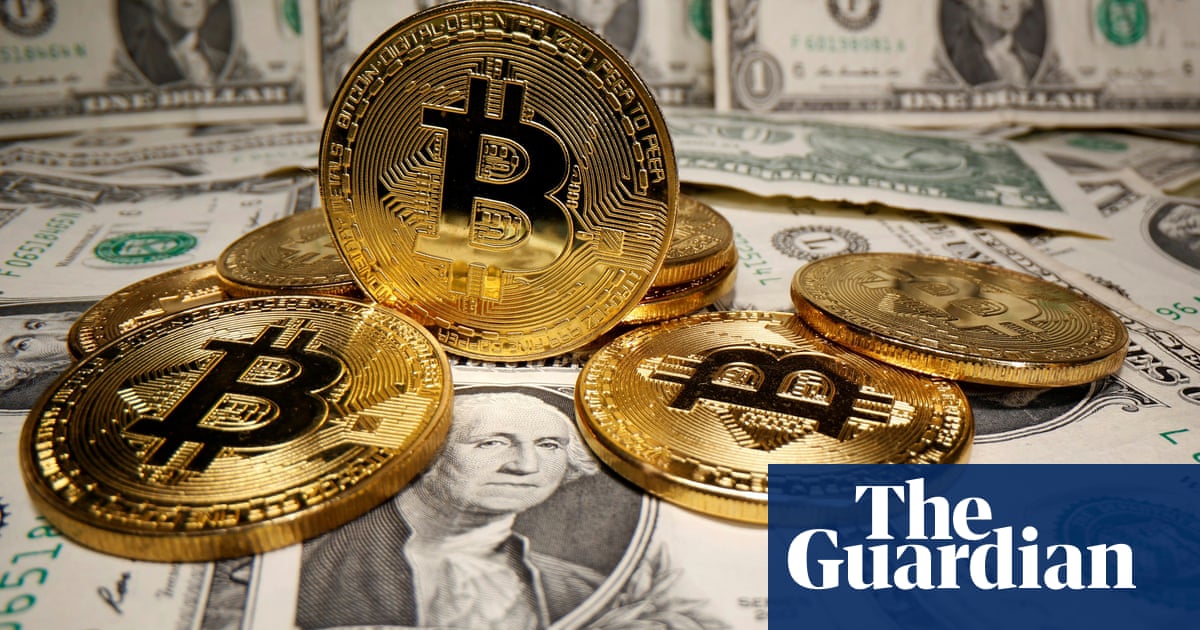 Bitcoin has continued its end-of-year Santa Claus rally, surging to a new high of more than $28,500. The cryptocurrency gained more than 5% to hit $28,572 on Wednesday. It is up 47% since the start of December and is on track for its biggest monthly gain since May 2019. Bitcoin has almost quadrupled in value this year as interest from institutional investors has grown. As the US dollar has declined, bitcoin has become a more attractive investment amid concerns that huge government stimulus packages prompted by the coronavirus pandemic will fuel inflation. In the US, a bigger package could be passed once Joe Biden has replaced Donald Trump as president. On Wednesday the dollar dropped to its lowest level since April 2018, when measured against a basket of currencies. The US currency is under pressure as investors move into riskier assets, betting on a strong economic recovery next year as coronavirus vaccines are rolled out. The vaccine developed by Oxford University and AstraZeneca was approved in the UK on Wednesday. Bitcoin has also been boosted by expectations that it will become a more mainstream payment method. PayPal has launched a crypto trading service on its platform and has reportedly bought nearly 70% of all new bitcoin in circulation. A number of hedge fund managers have revealed this year that they have invested in the cryptocurrency. Bitcoin is even being touted as an alternative to gold. Gold, the traditional safe-haven investment, has declined since hitting a record high of more than $2,000 an ounce in August, and is now flat at $1,879 an ounce. Some analysts expect gold and bitcoin to battle it out for dominance next year. Paolo Ardoino, the chief technology officer of the crypto exchange Bitfinex, said bitcoin could draw more interest from a broader audience, not just fund managers. "While a growing institutional presence has been part of the narrative of the current bull run, we may see increased retail interest in bitcoin as a form of digital gold," he said. Other cryptocurrencies such as Ether have also rallied. However, concerns remain about the speculative nature of cryptocurrencies, and there are regulatory issues. Last week the US Securities and Exchange Commission accused Ripple Labs and its senior executives of misleading investors in XRP, the third largest cryptocurrency, by selling $1bn of the virtual tokens without registering with the agency.  |
| You are subscribed to email updates from "cryptocurrency news" - Google News. To stop receiving these emails, you may unsubscribe now. | Email delivery powered by Google |
| Google, 1600 Amphitheatre Parkway, Mountain View, CA 94043, United States | |

Comments
Post a Comment